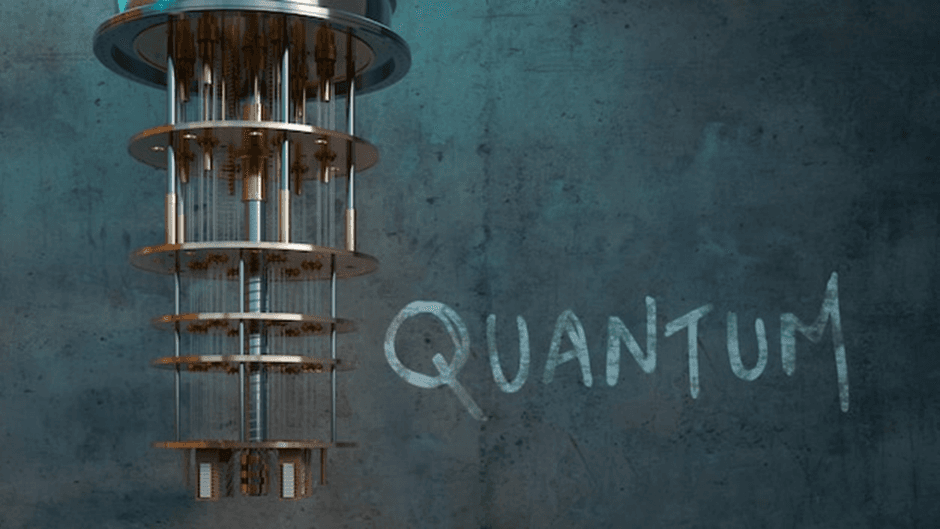
Chief Executive Officers (CEOs) and Chief Information Officers (CIOs) bear the responsibility of safeguarding their firms, stakeholders, clients, and workforce against cyber threats that could jeopardize confidential corporate information and financial stability. Presently, the most significant of these threats is the risk to the integrity and privacy of data, crucial to an organization's prosperity. This threat to our data doesn't only arise from current cyber-attacks and hackers. A 2023 study by the IBM Ponemon Institute suggests that a data breach costs businesses an average of $4.45 million. Besides the integrity and privacy threats, this threat to our data also involves future risks from quantum computing, capable of undermining public-key encryption systems, potentially allowing competitors, adversaries, or foreign entities to undetectably access and steal valuable corporate data.
In 2023, Gartner, a global research and advisory company, highlighted the threat of quantum computing again as a top digital disruption for which CIOs might be unprepared. Gartner emphasized that quantum computers could perform vast amounts of parallel calculations swiftly, potentially cracking the complex mathematics underlying current encryption methods.
Despite this, there's considerable uncertainty, even among specialists, regarding the actual impact of the quantum threat, its emergence timeline, and the necessary precautions to secure a company's future.
Peter Drucker, a renowned business management expert, once questioned the corporate world's longevity. It's clear that no organization can thrive if its critical data is consistently exposed to risks of theft or attack. Stakeholders, including employees, shareholders, investors, and the public, rely on corporate leaders to protect such data now and in the future.
To start this conversation about data protection from quantum computers, we will address two key questions in relation to quantum computing and cybersecurity:
- What is quantum supremacy?
- How do quantum computers threaten classical encryption?
So, What Is Quantum Supremacy?
On October 23, 2019, Google released a research article in Nature titled "Quantum Supremacy Using a Programmable Superconducting Processor," announcing their achievement of the long-sought milestone known as quantum supremacy. This feat signifies that a quantum computer accomplished in just a few minutes what the fastest supercomputer would take 10,000 years to solve.
This breakthrough, often referred to as quantum advantage, represents a significant step towards the development of future quantum computers, which could pose a substantial threat to current encryption methods. At the time, commentary around the announcement speculated that the era of encryption as we know it could end within as little as five years — a claim that, in hindsight, was clearly premature. However, the cybersecurity world is preparing regardless, for example by finalising the NIST post-quantum algorithms, to support our classical encryption with additional quantum-safe algorithms. The key word here is defence-in-depth.
How Do Quantum Computers Threaten Classical Encryption?
The concern today lies in the fact that modern cryptography primarily relies on what are "assumed" to be complex mathematical challenges — specifically, the decomposition of large numbers into their prime factors.

How Does This Function?
A prime number is a whole number that can't be broken down into smaller integers. Take, for instance, 19 — a prime number — while 27 isn't, as it can be divided into the prime factors 3 and 9. Multiplying numbers is straightforward, but reversing this process to identify the prime factors is significantly more challenging, particularly with very large numbers. This disparity in difficulty, particularly in factorizing these large numbers, is fundamental to the workings of contemporary public-key cryptography.
Going back to the above: why "assumed"? Because until 1994, the task of factorization was indeed considered difficult. However, in that year, Peter Shor developed an algorithm — now known as Shor's algorithm — which simplifies the factorization of large numbers. The catch is that it requires a quantum computer to run effectively, meaning that quantum computing could potentially resolve the central issue underlying cryptography.
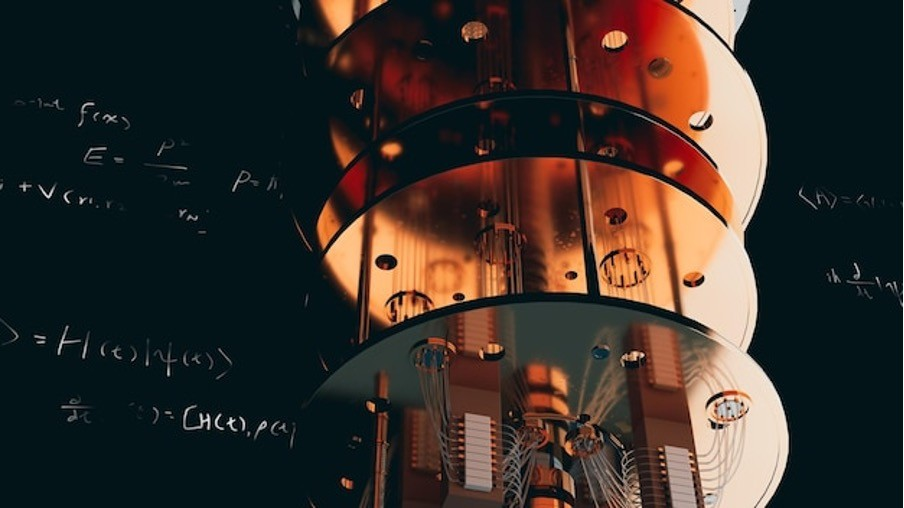
Shor's algorithm marked the first time the remarkable capabilities of quantum computing were demonstrated for practical use. This breakthrough altered our understanding of quantum computers and spurred efforts towards their physical creation and the development of new algorithms to harness their capabilities.