
In digital healthcare, the lifecycle of data is intrinsically tied to patient safety, legal mandates, care continuity, and research advancement. With Electronic Health Records (EHRs) becoming the norm, how long data should be kept and how the systems managing them evolve has become a pressing question. This piece looks at data shelf life and system lifecycle management in the healthcare sector, based on official UK, US, and industry guidelines.
Why This Matters for the Quantum Transition
Healthcare has one of the longest data shelf lives of any regulated sector — UK maternity records are held for 25 years, mental health records for 20, and some electronic records are retained in perpetuity. Genomic data and clinical histories carry sensitivity that doesn't expire on a fixed schedule at all; a person's genetic makeup or diagnosis history can matter to their privacy for their entire life and beyond.
That extended shelf life is exactly what makes healthcare data a prime Harvest-Now-Decrypt-Later target. An adversary capturing encrypted EHR traffic or archived imaging data today doesn't need to break the encryption now — they can wait, store it, and decrypt it once quantum computers make today's cryptography obsolete, potentially well within the retention window these records are legally required to sit in. Providers and EPR vendors treating "10 years post-death" or "20 years for mental health records" as a storage and access-control problem alone are underestimating the exposure: the encryption protecting that data needs to remain sound for the entire retention period, not just at the point of creation.
What Is a Health Record?
A health record (or medical record) is a structured compilation of clinical, administrative, and demographic information about a patient. It may include diagnoses, treatments, medications, imaging results, lab tests, clinical notes, and sometimes multimedia like photographs and X-rays. While originally paper-based, these records are now commonly stored as Electronic Patient Records (EPRs) or Electronic Health Records (EHRs). The NHS and other global health systems have standardized retention policies that dictate how long such data is stored and how systems should handle it over time.
Minimum Retention Periods (UK Perspective)
The Records Management Code of Practice (NHSX, 2023) outlines how long various healthcare records must be kept.
General GP Records (England and Wales)
Retained for 10 years after patient death. If the EPR system can destroy records as per the retention schedule and log the deletion via metadata, records can be purged accordingly. If not, systems should make the records inaccessible after decommissioning but retain the audit trail for the period of the last entry.
Scotland
GP records must be held for the lifetime of the patient and 10 years after death. Electronic records are retained in perpetuity unless stated otherwise (e.g., litigation or public inquiry).
Northern Ireland
The same 10-year post-death retention policy applies to older records. Newer records (post-2013) must undergo risk-based assessments every 5 years, and may be deleted, archived, or "put beyond use," in line with ICO guidance.
US Guidelines (HIPAA & State Law)
The HIPAA Security Rule mandates that covered entities and business associates retain audit logs, policies, and procedures for a minimum of 6 years from creation or last effect. HIPAA doesn't define a mandatory retention period for medical records themselves, so state and federal laws fill the gap:
| Record Type | Retention Period |
|---|---|
| GP Records (UK) | 10 years |
| Hospital Records – Adults (UK) | 8 years |
| Maternity Records (UK) | 25 years |
| Mental Health Records (UK) | 20 years |
| HIPAA Admin Records (US) | 6 years |
| Texas State Medical Records | 7 years |
| Medicare Managed Care | 10 years |
Litigation records carry indefinite retention regardless of jurisdiction.
The System Lifecycle in Healthcare (ILM)
The Information Lifecycle Management (ILM) model defines how healthcare data should move from creation to eventual disposal or archival:
- Creation/Receipt — Patient admission, consultation, test results.
- Access/Use — Viewing by physicians, billing, telehealth services.
- Maintenance — Backup, versioning, updates, system audits.
- Archival — Infrequently accessed data moved to cold storage (e.g., cloud).
- Disposition — Secure deletion after legal/clinical value expires.
During creation and receipt, healthcare data originates from clinical encounters, diagnostics, or administrative inputs — generated internally or received from other facilities, such as a referral letter from a specialist or lab results submitted to a GP's EPR system. In the access and use phase, data is actively consulted by care providers: patient history for consultations, prescriptions based on recent diagnostics, or billing records for submitted claims. This stage depends on role-based access controls and session monitoring to maintain integrity and authorized-only access.
Maintenance involves structured storage, retrieval capabilities, and regular audits — indexable metadata for patient name, ID, encounter dates, and department handling, alongside audit logging, immutability, and data masking. Archival moves infrequently accessed records to long-term storage, such as encrypted cloud environments, supporting retrieval for legal, clinical, or research purposes while aligning with retention mandates. Disposition is the final phase: records are either securely destroyed or put "beyond use" depending on jurisdictional rules — NHS EPRs must log metadata upon deletion or become inaccessible post-decommissioning, while HIPAA requires permanent deletion or cryptographic erasure with logged confirmation.
Proper lifecycle management also requires clear decommissioning strategies. NHS guidance emphasizes that EPRs must remain accessible even after system decommissioning; if records reach their retention limits and the system lacks the ability to destroy them securely, they should be made inaccessible and preserved only as part of a locked archive. Legal holds — such as those arising from inquiries like the UK COVID-19 Public Inquiry — require that routine destruction be halted, and NHS providers are expected to monitor ongoing inquiries to ensure no relevant data is deleted. Similarly, HIPAA-covered entities must retain all breach notification documentation indefinitely if associated with ongoing investigations.
Technical & Legal Considerations
Data Integrity & Security (HIPAA/UK):
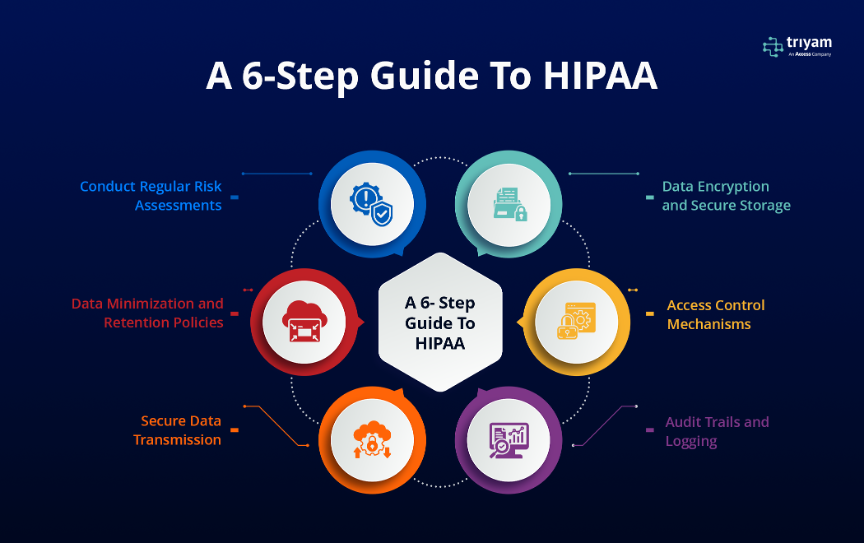
- Encryption (at rest and in transit) is mandatory under HIPAA and NHS guidelines.
- Role-Based Access Control (RBAC) ensures only authorized access.
- Audit logs must be immutable and stored for 6+ years.
Subject Access Rights (UK GDPR):
- Under UK GDPR, patients can request access to their records.
- Retaining records beyond necessity violates data minimization principles unless legally justified (e.g., litigation, inquiry).
Encryption mechanisms in practice include Transparent Data Encryption (TDE) and field-level encryption for sensitive identifiers like Social Security Numbers or diagnoses. Change management policies ensure that updates to systems handling ePHI undergo documented review, testing, and rollback plans, as outlined in the HIPAA Enforcement Rule. Bytebase also recommends tiered storage models (hot, warm, cold) to balance accessibility with retention obligations as record volumes scale.
Summary
The digital healthcare industry operates under strict data retention frameworks, both to protect patient rights and ensure continuity of care. In the UK, most health records must be kept for 8–25 years or more depending on context, with some held in perpetuity. US healthcare operates under HIPAA mandates supplemented by state and Medicare-specific rules. Effective information lifecycle management ensures secure, cost-effective data handling from creation to deletion — with the flexibility to support public inquiries or legal holds, and increasingly, with cryptographic agility built in for data that will still be sensitive decades from now.
References
- NHSX, "Records Management Code of Practice."
- British Medical Association, "Retention of Health Records."
- Scottish Government, "Records Management Code of Practice 2020."
- Northern Ireland Department of Health, "Good Management, Good Records (GMGR)."
- HIPAA Journal, "HIPAA Compliance and Medical Records."
- Triyam, "Data Retention in Healthcare: Enhancing Patient Safety and Care," 2025.
- Bytebase, "HIPAA Data Security and Retention Requirements," 2025.
- Wikipedia, "Information Lifecycle Management."