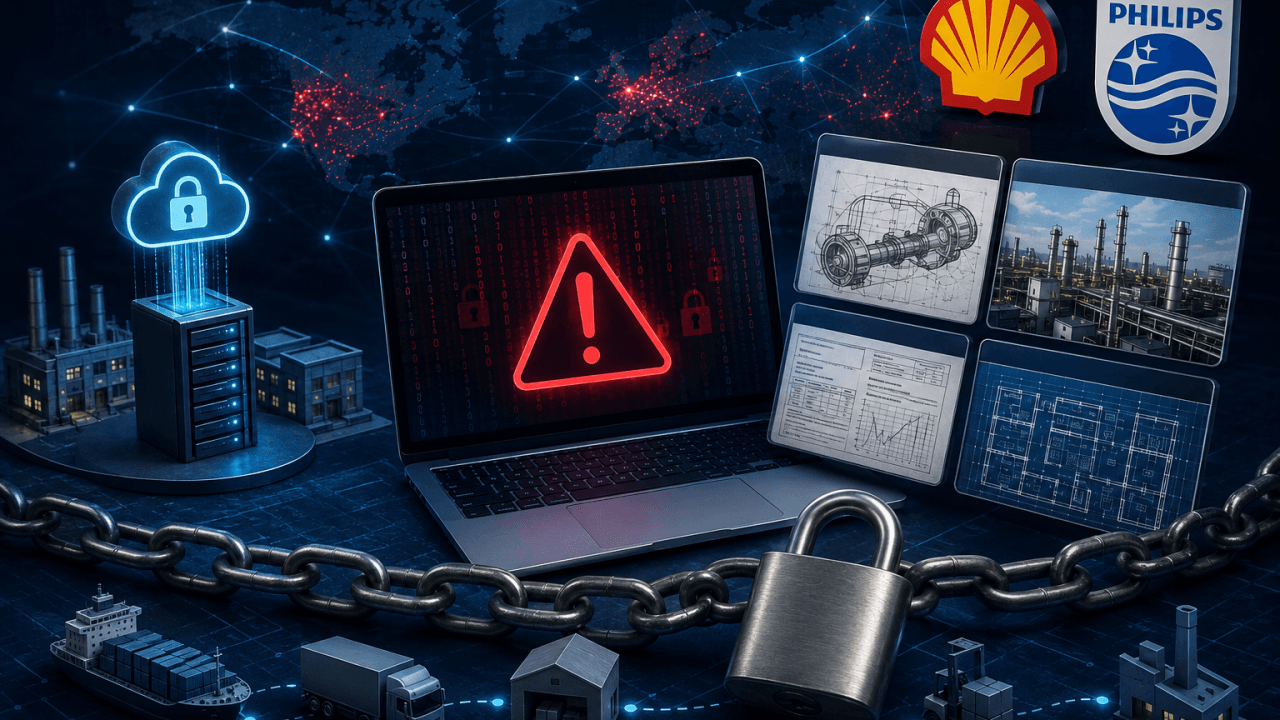
Cl0p has claimed Shell and Philips among nearly fifty organizations breached through a single vulnerability, CVE-2026-12569, in PTC's Windchill product lifecycle management platform, patched June 17 after apparent zero-day exploitation.¹ Reported material taken includes engineering drawings, facility imagery, test report scans and blueprints.² Coverage has focused on the resulting supply-chain exposure: one shared platform, one shared point of failure.³ The cryptographic question that follows is what protected that data once it left the platform, and that question outlasts the patch.
The boundary the patch does not reach
PTC's responsibility ends at closing the entry point. Whether the exfiltrated files were legible on exit, and whether any encryption keys protecting them were reachable from the same compromised application tier, sits on the data owner's side of the shared responsibility line. Neither company has disclosed this detail, and it is the question every organization running a PLM or engineering-document platform with internet-exposed components should be asking of its own environment now.
A decrypt-later problem, not just a today problem
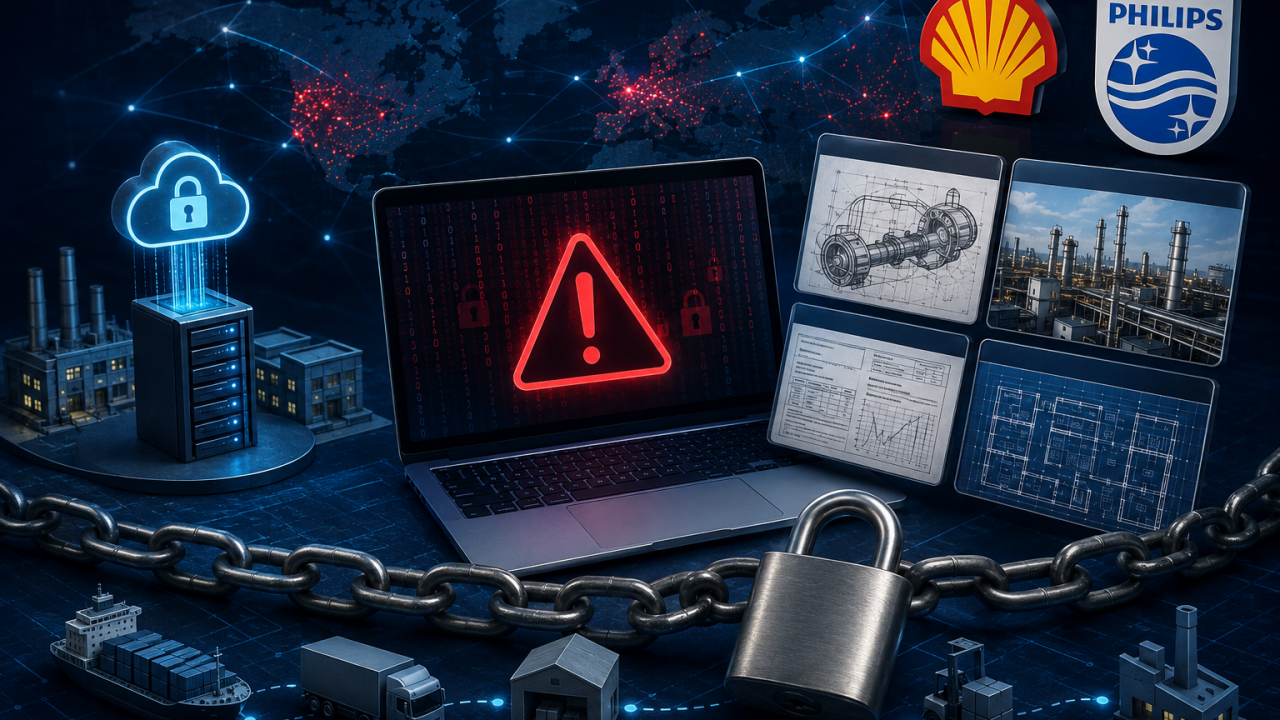
Engineering drawings, facility schematics and test reports typically need confidentiality for decades, not days. That profile is exactly what harvest-now-decrypt-later targets: an adversary does not need to break the encryption today, only to hold the exfiltrated material until it can. NIST finalized its first post-quantum algorithm standards in August 2024,⁴ and NSA's CNSA 2.0 suite sets a 2027 acquisition gate and a mid-2030s full migration horizon calibrated to its own estimate of when a cryptographically relevant quantum computer could exist.⁵ Data protected today by RSA or elliptic-curve algorithms and taken in a breach like this one carries a real exposure window measured against that horizon.
Cystel's view
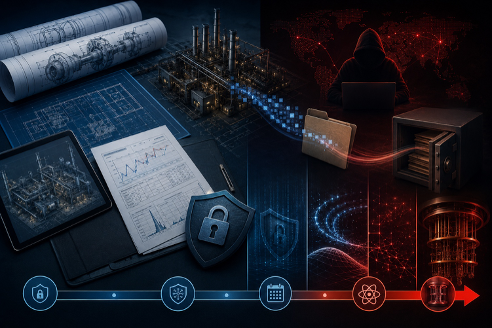
Encryption present is not the same as hygiene sound. A file can be encrypted at rest and still be exposed if its keys sit behind the same wall an attacker already breached, or if the algorithm protecting it was never built with a multi-decade threat horizon in mind. The platform vulnerability behind this breach will be patched everywhere it exists. The cryptographic assumptions underneath the data it exposed will not correct themselves.
Cystel recommends treating this incident as the trigger for a cryptographic vulnerability assessment across PLM, CAD and other long-lived engineering repositories: inventory the algorithms and key management practices in use, classify data by required confidentiality duration, and identify where the boundary protecting the data overlaps with the boundary most likely to be breached.
Sources
- SecurityWeek; BleepingComputer; TechTimes, coverage of CVE-2026-12569 and the Cl0p Windchill campaign, June–August 2026.
- DutchNews, "Shell and Philips hit by Russian ransomware attack," August 14, 2026.
- TheNextWeb, Ana-Maria Stanciuc, as cited in DutchNews, August 14, 2026.
- National Institute of Standards and Technology, FIPS 203, 204 and 205, finalized August 2024.
- National Security Agency, Commercial National Security Algorithm Suite 2.0 (CNSA 2.0), FAQ updated 2025.