Imagine a blockchain processing millions of transactions per second, smart contracts that predict market crashes before they happen, and cryptography that even quantum computers can't crack. Welcome to the quantum revolution of Web3.
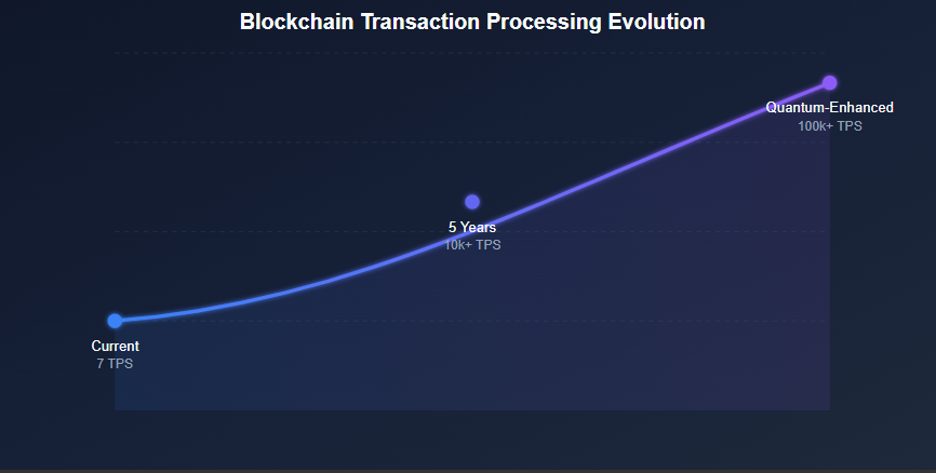
Early demonstrations of quantum-enhanced blockchain protocols are reporting meaningfully faster execution than traditional systems. This isn't just an improvement — it's a glimpse into the future of decentralized technology.
The Quantum Advantage in Web3
Current blockchains face a brutal reality: Bitcoin's 7 transactions per second feels archaic in our fast-paced digital economy. Enter quantum computing. NIST's quantum-resistant cryptography initiative isn't just protecting blockchain — it's revolutionizing it. IBM and Microsoft aren't just developing solutions; they're rewriting the rules of digital trust.
Smart contracts are evolving from simple if-then statements to quantum-powered financial oracles. Imagine DeFi protocols that analyze global markets in microseconds, adapting to economic shifts before traditional systems even detect them.
The Trillion-Dollar Question
Quantum-enhanced blockchains are being projected to significantly cut network synchronization times. This isn't just about speed — it's about unlocking Web3's true potential. Industry estimates suggest a substantial share of blockchain assets could be vulnerable to quantum decryption within a decade if migration doesn't happen in time.
Quantum-Safe Innovation Wave
The Quantum Resistant Ledger (QRL) isn't just another blockchain — it's a platform engineered specifically for the quantum age. Ethereum's shift to Proof-of-Stake isn't merely about energy efficiency; it's also part of preparing for quantum resilience. Lattice-based cryptography is emerging as the foundation of quantum-safe digital commerce.
The Future of Digital Asset Security
As quantum computing advances, traditional cryptography faces an existential threat. Yet this same threat is driving unprecedented innovation in digital security. Lattice-based cryptography, once a theoretical construct, is now being implemented by leading blockchain platforms. These quantum-resistant protocols don't just protect against future threats — they're enabling new forms of secure digital interaction that were previously impossible.
Revolutionizing Market Intelligence
Quantum computing isn't just securing Web3 — it's supercharging it. Market analysis that once took days is being compressed into far shorter windows, with quantum simulation models being explored to analyze complex derivative positions across multiple blockchains simultaneously and identify arbitrage opportunities with greater precision.
Cross-Chain Quantum Integration
The future of Web3 isn't siloed blockchains — it's quantum-enabled interoperability. New quantum bridge protocols are being developed to meaningfully cut cross-chain transaction times. This isn't just about speed; it's about creating a seamlessly connected decentralized ecosystem where assets flow freely between networks while maintaining quantum-grade security.
The Governance Revolution
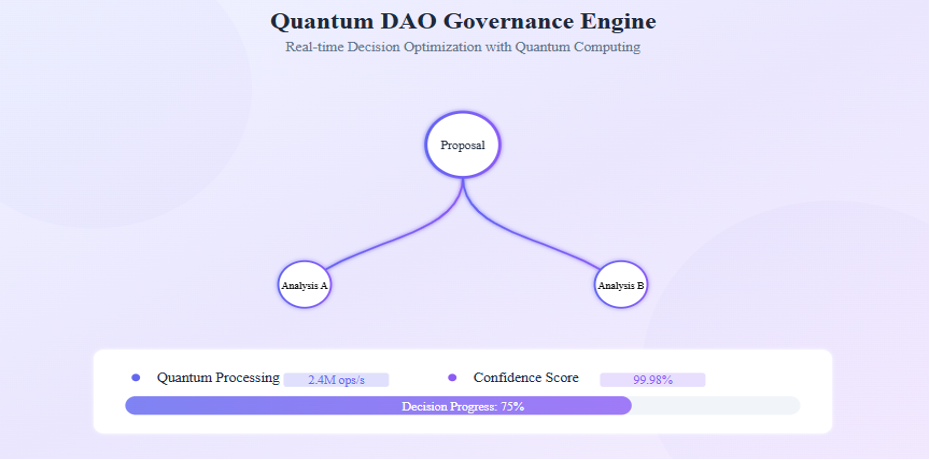
Quantum-powered DAOs represent perhaps the most transformative development in decentralized governance. These organizations aim to leverage quantum computing to simulate complex economic scenarios in real-time, supporting decisions with greater precision. The implications for democratic participation in the digital age are profound.
Looking Ahead: The Next Five Years
The quantum transformation of Web3 is accelerating. Industry projections suggest:
- Quantum-resistant protocols becoming standard by 2026.
- Cross-chain transaction times dropping toward sub-second levels.
- DAO participation growing as quantum simulation enables more sophisticated governance models.
The question isn't whether quantum computing will transform Web3, but how quickly organizations will adapt to this new paradigm.