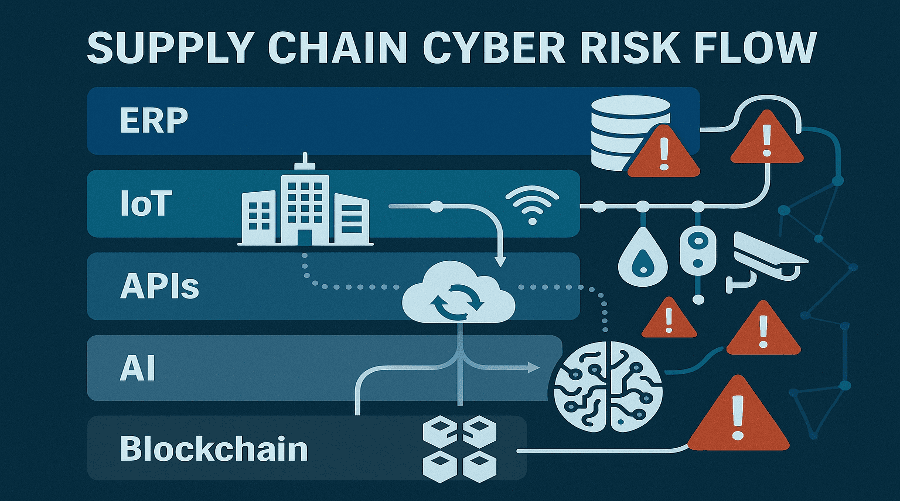
As global supply chains digitize and interconnect across borders, they face mounting vulnerabilities. From ransomware and data leaks to geopolitical sanctions and firmware attacks, the risks are accelerating. But on the horizon looms a computational threat unlike any seen before: quantum computing.
Quantum computers have the potential to render today's cryptography obsolete, exposing sensitive logistics data, intellectual property, authentication tokens, and blockchain-backed provenance systems. This piece explores the emerging practice of Quantum Risk Assessment (QRA) and how enterprises can embed quantum resilience into their supply chain security strategy today, before adversaries do.
The Digital Supply Chain: Empowered but Exposed
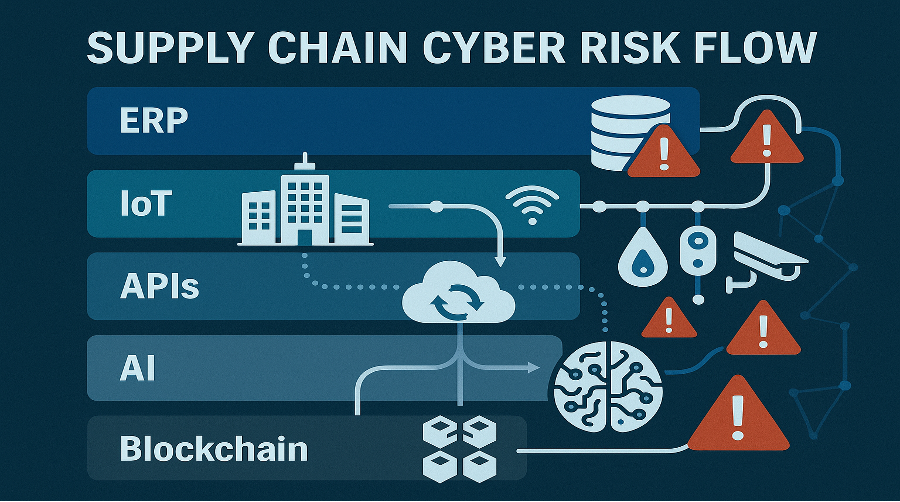
Modern supply chains function through intricate webs of digital interactions. Cloud-based ERPs, IoT devices, blockchain verification, AI-driven forecasting, and automated customs processing enable unprecedented global coordination. However, these innovations also concentrate risk.
According to McKinsey & Company, 95% of supply chain executives experienced significant disruptions in the past 24 months. Increasingly, these disruptions stem from cybersecurity failures, cascading through multi-vendor networks and cross-border data streams.
Cybersecurity, once an IT silo, is now an operational and reputational pillar. Enter quantum computing, an innovation that redefines the scale of digital risk.
Quantum Computing: Strategic Opportunity, Tactical Threat
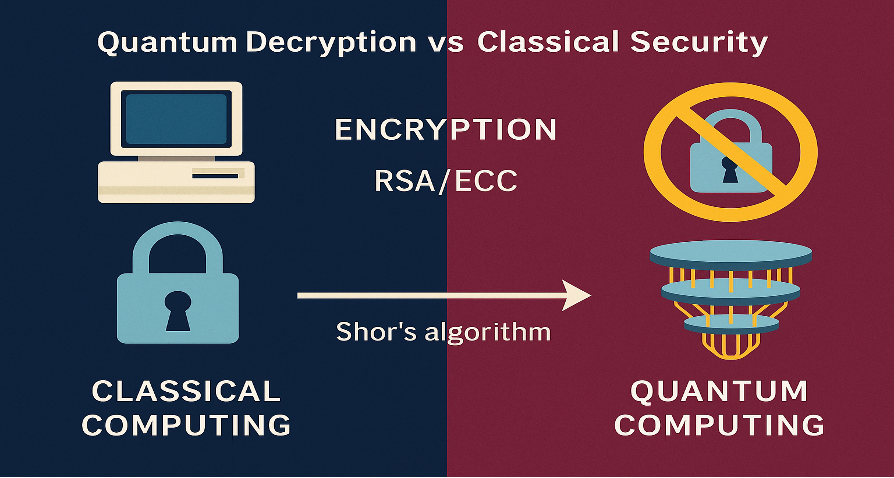
While quantum computing holds promise for solving complex logistics optimization problems and enhancing AI models, its cryptographic implications demand urgent attention.
Most systems today rely on public-key encryption like RSA, DSA, and ECC to secure API calls, TLS traffic, and data at rest. However, Shor's algorithm proves that these systems are mathematically breakable by quantum computers, reducing years of brute-force decryption into minutes.
NIST has taken the lead by standardizing post-quantum cryptographic algorithms, including Kyber (for encryption) and Dilithium (for digital signatures). Yet most organizations still rely on vulnerable algorithms and are unaware that adversaries could already be executing Harvest-Now-Decrypt-Later attacks — intercepting encrypted logistics, financial, or legal data today, with plans to decrypt it in the future.
Quantum Weaknesses in Supply Chains
The risk is not abstract. Here are quantum-relevant vulnerabilities already embedded in digital supply chains:
- TLS/API Exposure — Secure vendor integrations using TLS (based on RSA/ECC) are at risk of future compromise.
- Blockchain Provenance — Cryptographic signatures protecting proof-of-origin could be forged or invalidated.
- Intellectual Property Theft — Designs and formulas exchanged in long-term agreements may become vulnerable.
- Access Tokens & SSO — Federated login systems may rely on algorithms subject to quantum decryption.
- Legacy Firmware and Industrial IoT — Many embedded systems cannot be upgraded easily and depend on fixed, quantum-susceptible protocols.
The ENISA 2021 report warns that post-quantum migration will be uneven across industries, and attackers will target the most delayed nodes in the chain.
Quantum Risk Assessment (QRA): The New Frontier
Quantum Risk Assessment (QRA) is the systematic evaluation of cryptographic dependencies and potential quantum vulnerabilities across internal and third-party systems. It aims to quantify and reduce exposure well ahead of practical quantum threats.
According to Deloitte, fewer than 10% of organizations have begun PQC planning, despite a 5- to 10-year forecast for viable quantum attacks.
Key QRA steps include:
- Cryptographic Inventory — Map out every instance of RSA, ECC, and related protocols across applications, hardware, and communication.
- Vendor PQC Maturity Scan — Assess which suppliers are PQC-aware or capable of migrating.
- Data Longevity Tiering — Classify datasets based on how long their confidentiality must be preserved.
- Simulated Quantum Exploit Modeling — Run red-team exercises where TLS and signature protocols are assumed broken.
- PQC Pilot Testing — Deploy Kyber/Dilithium in non-critical systems to observe interoperability.
QRA doesn't just strengthen your perimeter — it strengthens your partners' too.
Overcoming Challenges: From Cost to Complexity
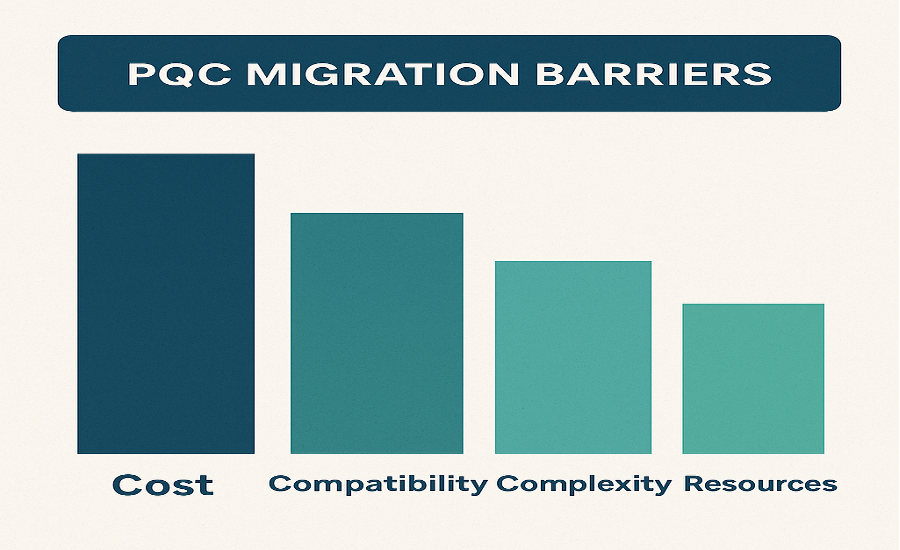
Why the hesitation? Most organizations cite one or more of the following barriers:
- Cryptographic Blind Spots — Many don't know which encryption their systems depend on.
- Vendor Lock-in — Proprietary SaaS tools may not yet offer PQC readiness.
- Integration Fatigue — IT teams may already be burdened with digital transformation projects.
- Budget Uncertainty — The quantum threat feels abstract and hard to quantify.
Yet, as Deloitte's 2024 leadership guide argues, early movers will gain operational trust, insurance leverage, and partner preference.
Strategic Recommendations
- Prioritize Long-Lived Data — Focus on encrypting data that needs confidentiality beyond 2028.
- Include PQC in RFPs and Procurement — Ensure vendor contracts ask for post-quantum transition plans.
- Deploy PQC in Hybrid Mode — Combine classical + post-quantum encryption during transition.
- Establish a Quantum-Ready Steering Group — Involve Legal, Risk, IT, and Procurement in PQC strategy.
- Track Emerging Standards — Follow NIST, ISO/IEC, and ETSI activities closely.
| Timeline | Milestone |
|---|---|
| 2025 | Conduct quantum risk assessment |
| 2026 | Identify vulnerable assets |
| 2027–2028 | Implement pilot projects |
| 2029–2030 | Migrate to post-quantum security |
Final Thoughts
The quantum threat isn't speculative. It's technical, tactical, and time-bound. If even one vendor or link in your supply chain remains cryptographically weak, your entire ecosystem could be exposed.
Quantum Risk Assessment is a proactive measure that signals strategic foresight and digital resilience. In the post-quantum era, trust will no longer be declared — it will be provable.
"The organizations that act now will not only secure their future but shape the trust infrastructure of global trade."
— Deloitte
References
- NIST, "Post-Quantum Cryptography Project."
- ENISA, "Post-Quantum Cryptography: Current State and Quantum Mitigation," 2021.
- McKinsey & Company, "Risk & Resilience in Global Value Chains," 2024.
- Deloitte, "Future Forward Readiness: Quantum Risk," 2022.
- Deloitte, "Business Leader's Guide to Quantum," 2024.