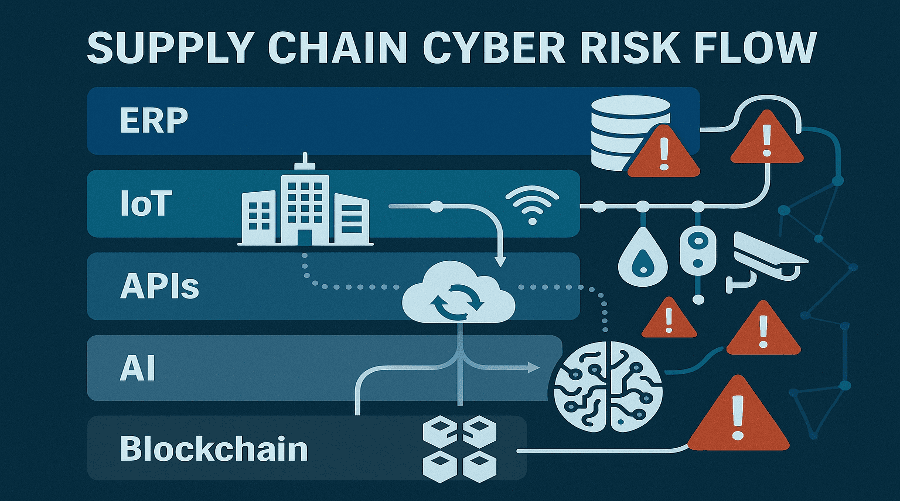
The maritime industry is undergoing a digital revolution, with increasing reliance on satellite-based navigation, remote vessel management, and intercontinental shipping logistics. While these advancements boost operational efficiency, they also expand the cyber-attack surface. Amid rising concerns over data integrity, cryptographic longevity, and spoofing threats, quantum technologies are emerging as both a potential threat and a long-term defense solution.
In this article, we explore where quantum innovation intersects with maritime cybersecurity, clarifying misconceptions, identifying practical use cases, and assessing long-term implications.
Lessons from the Maersk NotPetya Cyberattack
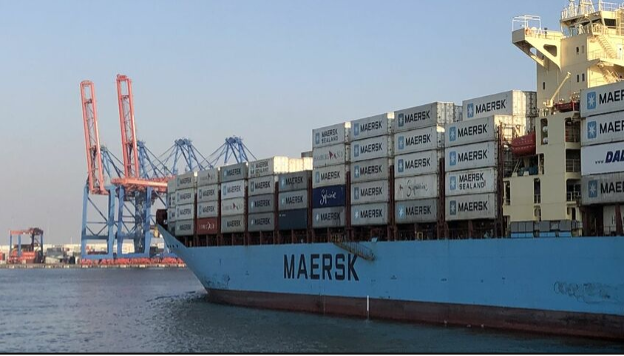
A pivotal moment came in 2017 when global shipping giant Maersk was hit by the NotPetya malware, a destructive wiper disguised as ransomware. The attack crippled IT systems across 130 countries, shutting down 50,000 computers and 4,000 servers, and left Maersk operating manually for days. The estimated damage ranged from $200 million to $300 million.
This attack wasn't quantum-enabled, but it highlights how dependent maritime operations are on digital infrastructure. As quantum computers evolve, they could one day undermine the very encryption standards protecting maritime communications.
Quantum Threats: A Clarified Perspective
It's essential to distinguish between existing threats and those introduced by quantum technology. Quantum computers are expected to break current asymmetric encryption methods like RSA and ECC using Shor's algorithm. This is not yet happening, but "Harvest Now, Decrypt Later" (HNDL) attacks are a growing concern. In HNDL, attackers intercept encrypted maritime communications now, intending to decrypt them in the future once quantum decryption becomes viable.
However, some concerns, such as GPS spoofing, are often misattributed to quantum capabilities. Global Navigation Satellite Systems (GNSS) used by civilian vessels are unencrypted by default. Spoofing these signals doesn't require quantum technology — it's already being exploited using conventional tools.
Instead, future opportunities lie in quantum-enhanced navigation authentication, such as using quantum clocks or integrating satellite-based GNSS authentication protocols (e.g., Galileo's OSNMA).
Practical Quantum Applications for Maritime Security
1. Quantum-Resistant Cryptography
The most urgent maritime cyber defense isn't QKD — it's migrating toward post-quantum cryptographic (PQC) algorithms standardized by NIST. These classical algorithms resist quantum decryption and can be implemented in:
- Vessel satellite uplinks
- Port IT infrastructure
- Maritime cloud-based logistics systems
Unlike QKD, PQC is software-based and more scalable across maritime environments.
2. Quantum Key Distribution (QKD) — Limited Use Cases
QKD offers provable secrecy, but it's expensive and limited by distance and line-of-sight issues. In maritime environments, QKD is unlikely to be viable for ship-to-ship communications due to high optical loss, sea conditions, and lack of physical security. However, QKD could play a role in:
- Fixed infrastructure (e.g., port authority data centers)
- Ship-to-shore communications (e.g., high-value military or research vessels)
- Undersea cable landing stations
3. Quantum Sensors for Maritime Surveillance
Quantum sensors using entangled particles or quantum interferometry may offer enhanced underwater object detection, secure positioning in GPS-denied environments, and detection of electronic emissions or hull movements. These applications remain largely experimental but are being explored by naval research agencies.
Maritime Standards, Regulation, and Preparedness
The International Maritime Organization (IMO) issued Guidelines on Maritime Cyber Risk Management (MSC-FAL.1/Circ.3), urging shipping companies to assess digital risks as part of the International Safety Management (ISM) Code. However, the guidelines stop short of addressing quantum threats.
Other frameworks such as ISO/IEC 15408, IEC 61162-460, and ENISA's Maritime Cybersecurity Strategy provide a foundation for developing PQC transition strategies in maritime systems.
Currently, no specific quantum-readiness mandates exist for the maritime sector — but governments and insurers are starting to factor quantum risk into long-term resilience planning.
Preparing Maritime Systems for the Quantum Era
Immediate Actions:
- Conduct crypto inventory on vessel and port systems.
- Flag legacy encryption (RSA-2048, ECC, TLS 1.2) for upgrade.
- Develop post-quantum migration plans using NIST recommendations.
- Integrate GNSS authentication mechanisms and explore alternatives like eLoran or VDES R-Mode.
Strategic Roadmap:
- Monitor quantum cryptography pilots in national maritime labs.
- Collaborate with OEMs and integrators to ensure PQC support in shipboard systems.
- Advocate for IMO/ISO inclusion of quantum risk assessment in safety codes.
Conclusion
Quantum technologies will not replace current maritime systems, but they will reshape the threat landscape and toolkit for maritime cybersecurity. While GPS spoofing and AIS vulnerabilities are present-day threats, quantum computing introduces long-term cryptographic challenges. The most practical step today is to prepare for post-quantum cryptography, while cautiously exploring specialized quantum applications for high-value maritime infrastructure.
In doing so, maritime stakeholders can stay ahead of both conventional and next-gen cyber risks, ensuring that the oceans remain open, secure, and resilient.
References
- Maersk, "Cyberattack Update," 2017.
- MDPI, "GNSS Spoofing and Maritime Cybersecurity," 2022.
- IMO, "Guidelines on Maritime Cyber Risk Management (MSC-FAL.1/Circ.3)," 2020.
- NIST, "Post-Quantum Cryptography Standardization Project," 2023.