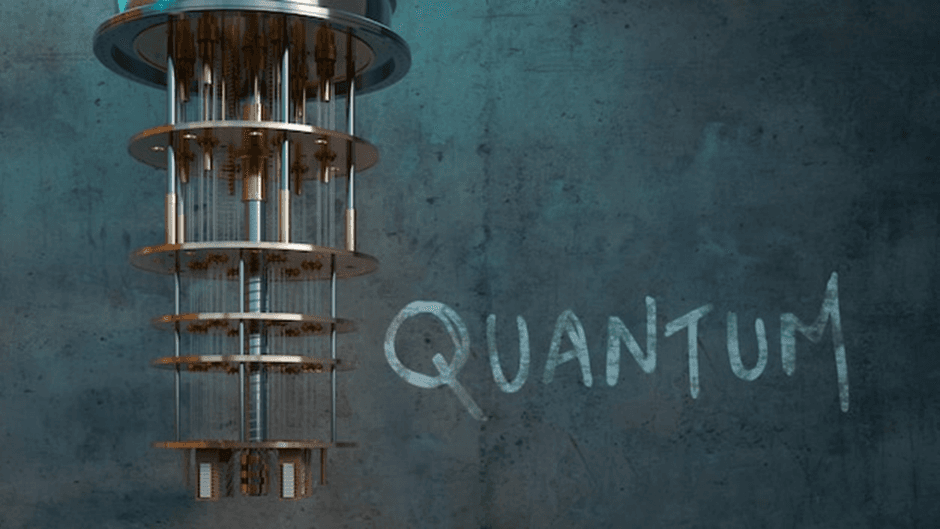
The Quantum Revolution: A Double-Edged Sword for Cybersecurity
As we stand on the brink of the quantum computing era, both defenders and attackers in the cybersecurity landscape are bracing for significant change. For C-level executives, understanding the implications of this technological leap is crucial for strategic planning and risk management.
The Quantum Threat Landscape
Quantum computers have the theoretical potential to break many of the cryptographic systems that currently safeguard our digital world. The most commonly cited academic estimate — from a 2019 analysis by Craig Gidney and Martin Ekerå — puts the requirement at around 20 million noisy physical qubits running for about 8 hours to factor a 2048-bit RSA key. A separate, more idealized estimate assumes a hypothetical computer of roughly 4,099 perfect, error-free qubits could do it in seconds. Neither kind of machine exists today — current quantum processors have at most a few hundred physical qubits, none of them error-corrected at that scale — but the gap between "theoretical" and "practical" has been narrowing steadily, and that trend is worth watching closely.
Key Vulnerabilities

- Public Key Cryptography: Algorithms like RSA and ECC are particularly vulnerable to quantum attacks.
- Symmetric Key Algorithms: While not as vulnerable as public key systems, the effective key length is roughly halved against quantum attacks using Grover's algorithm.
- Digital Signatures: Current signature schemes could eventually be rendered obsolete, threatening the integrity of digital transactions and communications.
Quantum Hacking Techniques on the Horizon
Shor's Algorithm: The Cryptography Killer
Shor's algorithm, when implemented on a sufficiently powerful, fault-tolerant quantum computer, could factor large numbers exponentially faster than classical computers. This capability directly threatens the security of RSA encryption, which relies on the difficulty of factoring large prime numbers.
Grover's Algorithm: Supercharging Brute Force
While less dramatic than Shor's algorithm, Grover's algorithm could meaningfully speed up brute-force attacks on symmetric key cryptography. It effectively reduces the brute-force search space from 2^n to 2^(n/2), where n is the key size — which is why doubling key lengths is a common mitigation for symmetric ciphers.
Quantum Machine Learning for Advanced Malware
Quantum machine learning algorithms could potentially enable more sophisticated and adaptive malware, capable of evading traditional detection methods, though this remains a more speculative, longer-horizon concern than the cryptographic threats above.
The Current State of Quantum Computing
As of 2024, the race for quantum advantage is intensifying:
- IBM's public roadmap targets a fault-tolerant system (Starling) with 200 logical qubits by 2029, followed by a successor system (Blue Jay) targeting 2,000 logical qubits by 2033 and beyond — a meaningfully different milestone from simply building "a 2,000 qubit computer."
- Google reported achieving quantum supremacy in 2019 with its 53-qubit Sycamore processor and has continued scaling since.
- China has developed the 66-qubit Zuchongzhi quantum processor.
While these systems remain far from being able to break current encryption, the pace of advancement is worth taking seriously. The "harvest now, decrypt later" strategy employed by some nation-states means that encrypted data intercepted today could be decrypted once quantum computers become powerful enough.
Challenges for Quantum Hackers
Despite the potential power of quantum computers, significant hurdles remain for would-be quantum hackers:
- Hardware Requirements: Quantum computers require extreme cooling and are highly sensitive to environmental disturbances. Current systems are large, expensive, and difficult to maintain.
- Error Correction: Quantum states are inherently noisy and prone to errors. Achieving the level of error correction necessary for cryptanalysis at scale is a significant, unsolved engineering challenge.
- Algorithmic Complexity: Implementing quantum algorithms like Shor's is far more complex in practice than running classical algorithms.
- Access Limitations: For the foreseeable future, quantum computing capabilities capable of any cryptographic relevance will likely be limited to well-funded nation-states and large corporations.
Defensive Strategies: Staying Ahead of Quantum Threats
Post-Quantum Cryptography (PQC)
NIST finalized its first three quantum-resistant cryptographic standards in August 2024. Organizations should be planning for the transition to these new standards:
- CRYSTALS-Kyber (ML-KEM / FIPS 203) for key encapsulation
- CRYSTALS-Dilithium (ML-DSA / FIPS 204) for digital signatures
- SPHINCS+ (SLH-DSA / FIPS 205) as a backup, hash-based signature scheme
- FALCON is expected to follow as an additional signature standard (FN-DSA) once its own standardization process concludes
Crypto-Agility
Implementing crypto-agility in systems now will allow for faster adoption of quantum-resistant algorithms as they mature. This involves designing systems to be flexible enough to swap out cryptographic algorithms without major overhauls.
Quantum Key Distribution (QKD)
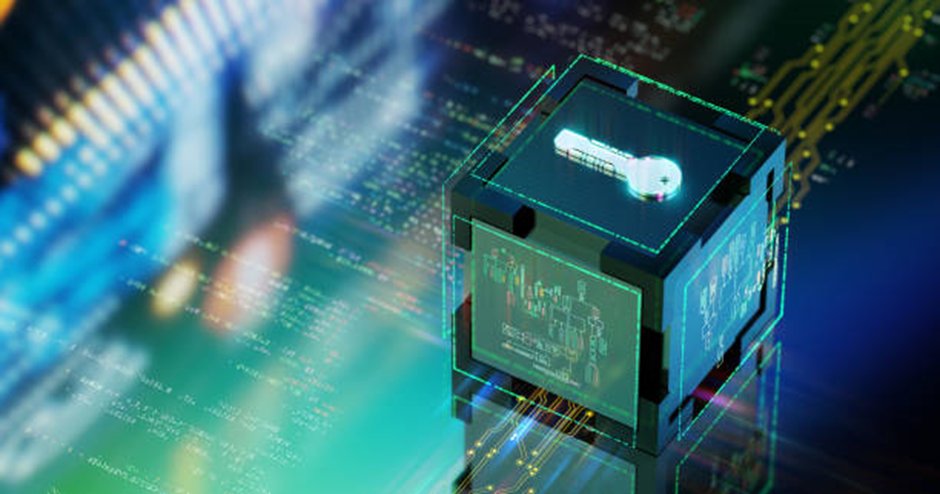
QKD uses quantum mechanics to distribute encryption keys with security guarantees rooted in physics rather than computational difficulty. While currently limited in range and expensive, it offers a genuinely different layer of protection against quantum attacks. China has already demonstrated intercontinental QKD via satellite.
The Human Factor: Talent and Training

The quantum era will require a new breed of cybersecurity professionals. Organizations should start investing in:
- Quantum literacy programs for existing security teams
- Recruitment of quantum computing and post-quantum cryptography specialists
- Collaboration with specialist institutions to stay at the forefront of quantum security developments
Strategic Considerations for C-Level Executives
- Risk Assessment: Conduct a thorough quantum risk assessment to identify vulnerable systems and data.
- Long-Term Data Protection: Consider "crypto-shredding" techniques for data that must remain secure for extended periods.
- Budget Allocation: Start allocating resources for quantum-safe security measures in long-term budgets.
- Supply Chain Security: Ensure your vendors and partners are also preparing for the quantum transition.
- Regulatory Compliance: Stay informed about emerging regulations related to post-quantum cryptography and quantum-safe security measures.
Conclusion: Preparing for the Quantum Future
The quantum revolution presents both real challenges and real opportunities for cybersecurity. The threat that quantum computing poses to current cryptographic systems is genuine and long-term, but the practical hurdles facing quantum hacking provide a real window of opportunity for preparation.
C-level executives must lead their organizations through this transition, balancing the need for near-term action with strategic long-term planning. By investing in quantum-safe technologies, fostering quantum literacy, and staying informed about the rapidly evolving quantum landscape, organizations can turn the quantum challenge into a competitive advantage.
The race against quantum disruption has already begun. Those who prepare now will be best positioned to thrive in the post-quantum world.