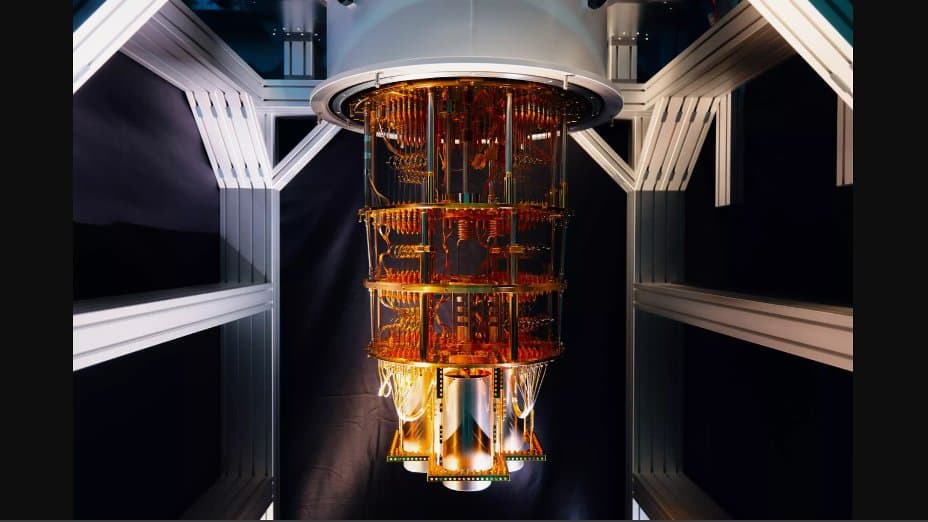
The cybersecurity world is facing a paradox: we must solve tomorrow's quantum computing threat today. While this might sound like science fiction, recent developments have turned this theoretical concern into an immediate challenge that's reshaping global security strategies.
The Silent Threat Already in Motion

Picture this: somewhere in the world, adversaries are already collecting encrypted data, patiently waiting for quantum computers to become powerful enough to break today's encryption. This isn't speculation — it's a documented strategy known as "harvest now, decrypt later." The Global Risk Institute's 2024 Quantum Threat Timeline Report, based on a survey of quantum computing experts, put the probability of a cryptographically relevant quantum computer emerging within a decade at up to 34%, roughly double the 17% estimate from its 2022 survey.
What makes this particularly alarming is that many organizations protect data that must remain confidential for decades — think health records, state secrets, intellectual property, or financial transactions. If this data is intercepted today, it could be decrypted once quantum computers mature, potentially as early as the 2030s.
Why Traditional Encryption Is Living on Borrowed Time
Current cryptographic security relies on mathematical problems that classical computers find practically impossible to solve within a useful timeframe. Quantum computers, however, play by different rules:
| Quantum Computing | Classical Computing | |
|---|---|---|
| Basic unit | Calculates with qubits, which can represent 0 and 1 at the same time | Calculates with transistors, which represent either 0 or 1 |
| Scaling | Power increases exponentially in proportion to the number of qubits | Power increases roughly 1:1 with the number of transistors |
| Best suited for | Optimization problems, data analysis, and simulations | Most everyday processing |
The implications are significant: many of the digital security systems we rely on today — from online banking to secure communications — could eventually become vulnerable to a sufficiently powerful quantum computer.
This isn't just theoretical. In February 2024, the Monetary Authority of Singapore issued an advisory about quantum threats to the financial sector. In September, the G7 Cyber Expert Group called for coordinated action on quantum risk in financial services. And in August 2024, NIST finalized its first new cryptographic standards in nearly two decades (ML-KEM, ML-DSA, and SLH-DSA — FIPS 203, 204, and 205) — a watershed moment in cybersecurity after an eight-year evaluation process.
The Race Against Time: Understanding Mosca's Theorem
Michele Mosca, a pioneering quantum researcher, formulated a simple but powerful theorem that's now driving global cybersecurity strategy: if your organization needs to protect data for X years, and it will take Y years to become quantum-safe, you must begin transitioning before quantum computers arrive in Z years, where X + Y < Z.
Here's the crucial part: historical evidence shows that major cryptographic transitions typically take 5–15 years (Y). Many organizations need to protect data for at least 10 years (X). With quantum computers potentially arriving in the 2030s (Z), many organizations are already inside the critical window for action.
Global Powers Are Moving Fast
The urgency isn't lost on world leaders. The EU is developing a comprehensive quantum-safe transition strategy that combines both post-quantum cryptography (PQC) and quantum key distribution (QKD) approaches. China has launched the world's first quantum satellite and built out a long-distance quantum communication network spanning thousands of kilometers. The U.S. has directed federal systems to transition to quantum-resistant cryptography, with priority civilian systems targeted for migration by 2035.
Tech companies aren't waiting either — several major platforms have already begun implementing post-quantum algorithms ahead of final rollout, even before every standard was finalized. This proactive approach signals a critical reality: waiting for quantum computers to arrive before acting is a risky strategy.
Your Organization's Action Plan
The path to quantum resilience requires a three-pronged approach:
1. Immediate Protection
- Identify and prioritize data requiring long-term confidentiality
- Implement hybrid classical-quantum cryptographic solutions
- Begin testing NIST-approved post-quantum algorithms in non-critical systems
2. Strategic Planning
- Develop a quantum-risk assessment framework
- Create a detailed transition roadmap with clear milestones
- Build crypto-agility into all new systems and updates
3. Future-Proofing
- Engage with emerging quantum-safe standards and protocols
- Prepare for the integration of quantum key distribution technologies
- Build internal expertise in post-quantum cryptography
The Cost of Inaction
The U.S. government estimates that transitioning just its priority civilian systems to quantum-safe algorithms will cost approximately $7.1 billion between 2025 and 2035. That figure alone hints at the scale of the challenge facing private organizations. However, the cost of inaction could be far greater. Organizations that fail to prepare risk:
- Exposure of sensitive data through harvest-now-decrypt-later attacks
- Sudden operational disruption when quantum computers mature
- Rushed, expensive, and potentially flawed emergency transitions
- Loss of customer trust and competitive advantage
The Time for Action Is Now
The quantum cryptographic threat isn't just another cybersecurity challenge — it's a fundamental shift that requires rethinking how we protect digital assets. The good news is that we already have the tools and knowledge to begin this transition today. Organizations that act now won't just protect themselves against future quantum threats — they'll build more resilient and adaptable security infrastructures in the process.
As we stand at this crucial juncture, the question isn't whether to prepare for the quantum future, but how quickly organizations can mobilize to meet it. The countdown has begun. Has your organization started its quantum security journey?