As quantum computing accelerates toward practical deployment, cybersecurity leaders face mounting urgency. Quantum breakthroughs promise transformative benefits across industries but simultaneously threaten to render classical encryption methods (like RSA and ECC) obsolete, exposing critical data. Security Operations Centers (SOCs) are on the frontlines of this shift but often lack a clear, actionable path for quantum readiness.
This piece delivers SOC professionals practical insights on quantum risks, operational impacts, and concrete steps to safeguard their operations.
Quantum Threat Landscape
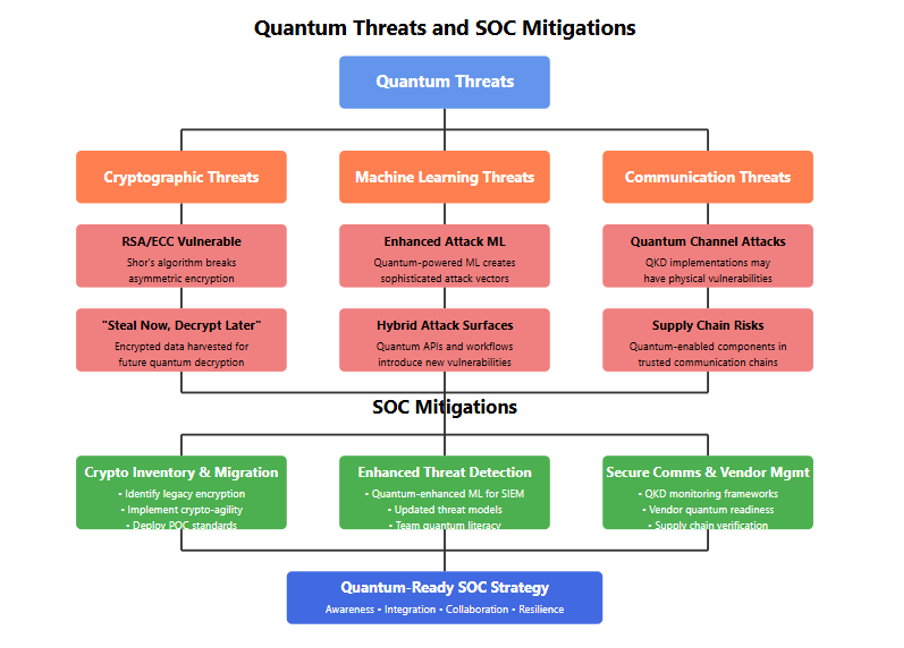
Quantum computers solve specific mathematical problems — such as factoring large numbers (breaking RSA) and solving discrete logarithms (breaking ECC) — exponentially faster than classical systems. This threatens most current cryptographic defenses. The U.S. National Institute of Standards and Technology (NIST), the National Security Agency (NSA), IBM, and the World Economic Forum (WEF) have all raised urgent warnings that organizations must prepare now.
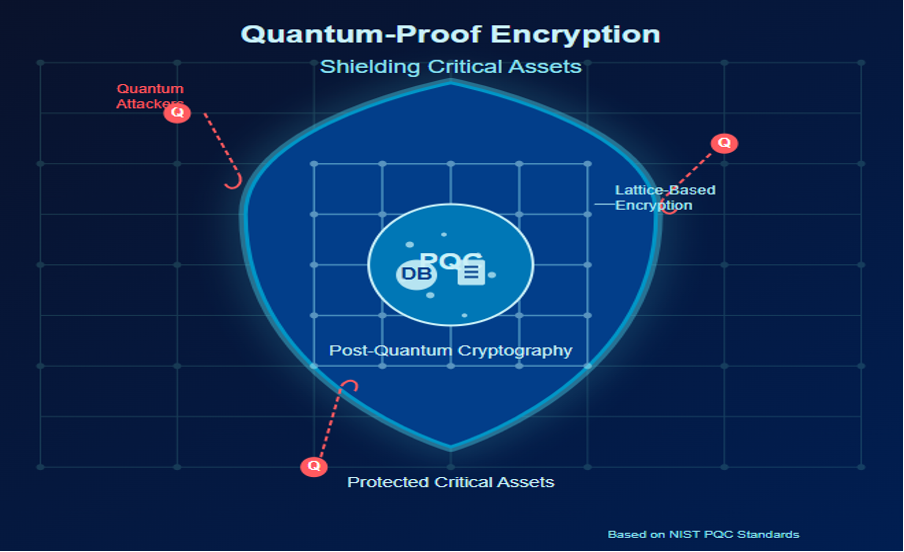
IBM's Quantum-Safe Cryptography overview highlights that quantum computing could break widely used encryption schemes like RSA and ECC within the next decade. NIST estimates the first breaches may occur as soon as 2030, with some researchers predicting a 50% chance by 2031. Waiting until quantum computers are here will be too late.
Why SOCs Are Vulnerable
While SOCs excel at handling real-time incidents, quantum risks fall under long-tail, high-impact categories that are often overlooked. Key gaps include:
- Cryptographic Inventory Blind Spots — Many SOCs lack a detailed inventory of systems, services, and applications dependent on quantum-vulnerable cryptography.
- Limited Quantum Expertise — Most SOC analysts are not yet trained in post-quantum cryptographic (PQC) principles or mitigation strategies.
- Third-Party Dependencies — Vendors and integrated tools may lag in adopting quantum-safe algorithms, introducing hidden weaknesses.
Action Steps for Quantum-Ready SOCs
1. Map Your Cryptographic Footprint
Conduct a full inventory of where RSA, ECC, or similar schemes are used, including:
- SSL/TLS protocols
- VPNs
- Encrypted storage
- Identity and access systems
2. Track Evolving PQC Standards
Closely follow NIST's post-quantum cryptography standardization efforts, which recommend algorithms like CRYSTALS-Kyber and CRYSTALS-Dilithium. IBM has been at the forefront, contributing to two of NIST's first three PQC standards.
3. Pressure Vendors for Quantum Roadmaps
Engage key technology vendors proactively. Request clear plans for integrating quantum-safe solutions, and ensure future upgrade clauses are written into contracts.
4. Elevate Quantum Awareness in Training
Incorporate quantum security topics into SOC training programs, preparing analysts to identify quantum-related risks and attack vectors.
5. Reassess Data Lifespans and Key Management
Identify long-lived data (like healthcare, legal, or financial records) that may remain sensitive well into the quantum era. Prioritize re-encryption or quantum-safe protection for these assets.
Looking Ahead: Preparing for the Quantum-Classical Convergence

While fully fault-tolerant quantum systems are not yet here, rapid progress — such as IBM's quantum roadmap and MIT's recent breakthroughs in quantum couplers — makes it essential for SOCs to prepare now. Delaying quantum preparation increases operational and reputational risk.
References
- NIST, "Post-Quantum Cryptography Standardization Project," 2023.
- NSA, "Quantum-Readiness Guidance," 2023.
- World Economic Forum, "Global Cybersecurity Outlook 2025," 2025.
- PQShield, "Quantum Threat Report," 2022.
- IBM, "Quantum-Safe Cryptography Overview," 2024.