The integration of frontier artificial intelligence into enterprise security has introduced a dangerous false confidence across corporate boardrooms. The rapid advancement of these models has compressed the timeline for vulnerability discovery and exploit development, leading many executives to a flawed conclusion: if AI can autonomously find and exploit software weaknesses, it will solve the cryptographic inventory problem before cryptographically relevant quantum computers (CRQCs) break current encryption.
While frontier models represent a milestone in cybersecurity, they cannot map a sprawling cryptographic estate. The transition to post-quantum cryptography (PQC) is not a modeling problem; it is a fundamental visibility and governance challenge that automated tools cannot resolve.
The "Harvest Now, Decrypt Later" Reality
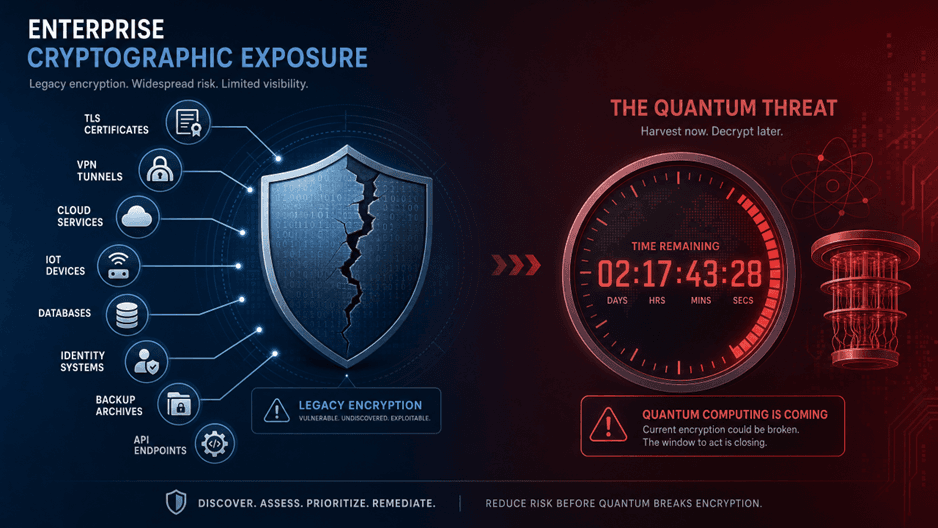
The most dangerous part of quantum risk is not a distant, theoretical future — it is the encryption your board currently assumes is invisible. Organizations face an immediate and ongoing threat known as "harvest now, decrypt later" (HNDL).
Adversaries are actively exfiltrating, collecting, and storing encrypted data today. They do not need to break the encryption right now. Their strategy is simply to hoard the data until cryptographically relevant quantum computers become available.
Gartner predicts that advances in quantum computing will render the asymmetric cryptography organizations rely on to secure data unsafe by 2030. If your organization's intellectual property, trade secrets, financial records, or state secrets have a shelf life extending beyond 2030, that data is already compromised the moment it is harvested.
Why Claude Mythos Creates a Dangerous Illusion
For CISOs, CTOs, and CIOs, the implications of frontier AI are profound. AI is compressing the time between "possible" and "compromised." Vulnerability discovery is accelerating rapidly, and exploit development is becoming cheaper and faster. Recent intelligence indicates a 1,500% surge in illicit AI-related discussions among threat actors.
Because AI is so proficient at finding flaws, executives naturally assume it can perform a cryptographic inventory. They believe Claude Mythos will scan their networks, locate every vulnerable certificate, and patch the infrastructure. It will not.
Quantum safety is frequently discussed as if it were a single, straightforward technical upgrade. It is not. It is a sprawling, complex enterprise transformation. Cryptographic inventory is not a project with a defined completion date; it is an ongoing program that must be deeply embedded into security operations.
Your enterprise environment likely includes a vast web of interconnected cryptographic dependencies. A frontier model can support the hunt for vulnerabilities, but it cannot independently determine where every cryptographic control is utilized, which assets must survive beyond 2030, or which third-party vendors are genuinely quantum-ready.
Critical Cryptographic Dependencies AI Cannot Autonomously Fix
- TLS Configurations and VPNs — Deeply embedded network encryption protocols
- Certificate Authorities, PKI, and HSMs — The foundational trust anchors of the enterprise
- Code Signing Systems — Authentication mechanisms for proprietary software
- Identity and Access Management — Platforms securing user and machine identities
- Long-Lived Archival Data — Backups currently vulnerable to HNDL attacks
The most dangerous aspect of Claude Mythos is that it lulls executive leadership into a false sense of security. The rise of AI in cybersecurity changes the pace of discovery, but it does not replace the fundamental governance work required to modernize cryptographic estates.
The Deadline is Already Here
The transition timeline is not dictated by when your organization feels ready; it is dictated by federal mandates and technological advancement. The National Institute of Standards and Technology (NIST) has already finalized its first three post-quantum encryption standards — FIPS 203, FIPS 204, and FIPS 205 — marking the official beginning of the transition period.
Furthermore, NIST timelines indicate that current RSA and ECC standards will be deprecated by 2030 and entirely disallowed by 2035. Organizations that wait for an AI tool to solve their quantum migration will find themselves dangerously exposed.
Cryptographic risk is no longer merely a technical issue; it is a critical business risk with severe compliance, resilience, and brand implications. If your encrypted data is harvested today, no AI model in 2030 will be able to retroactively protect it from a quantum computer.
Governance Becomes the Ultimate Defense
Claude Mythos highlights an uncomfortable truth: machine intelligence can improve security operations, but it cannot eliminate security reality. While AI can help identify code flaws and summarize risks, quantum safety remains a governance, inventory, migration, and resilience challenge.
The biggest risk is rarely a single broken algorithm. It is the sprawling web of legacy applications, third-party dependencies, cloud services, and long-lived data archives. To navigate this transition successfully, organizations must move beyond relying solely on automated discovery tools and implement robust cryptographic governance frameworks.
Call to Action: How Safe is Your Organisation?
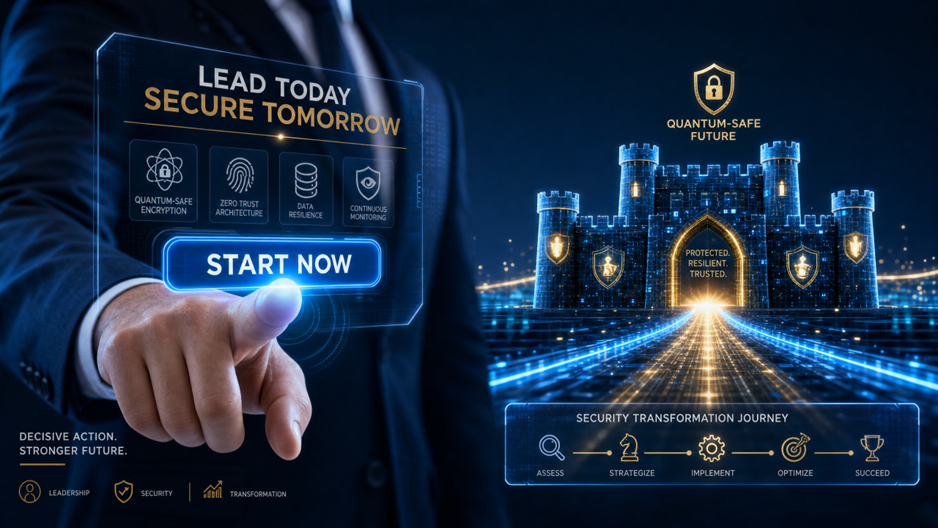
The clock is ticking on the quantum transition, and the "Harvest Now, Decrypt Later" threat is actively targeting your data. Your encryption map is your real defense against the accelerated threats posed by both frontier AI and quantum computing.
Take the first step toward quantum safety:
- Discover — Initiate a comprehensive cryptographic inventory to uncover hidden dependencies that AI cannot map alone.
- Assess — Evaluate your immediate exposure to "harvest now, decrypt later" data exfiltration threats.
- Migrate — Partner with Cystel to develop and execute a prioritized transition plan aligned with the latest NIST standards.
References
- Palo Alto Networks, "Harvest Now, Decrypt Later (HNDL): The Quantum-Era Threat."
- Gartner, "Gartner Identifies the Top Cybersecurity Trends for 2026," February 2026.
- CrowdStrike, "Frontier AI Collapses the Exploit Window: How Defenders Must Respond," April 2026.
- Digital Journal, "How AI is accelerating vulnerability discovery and exploitation," April 2026.
- National Institute of Standards and Technology (NIST), "NIST Releases First 3 Finalized Post-Quantum Encryption Standards," August 2024.
- National Institute of Standards and Technology (NIST), "IR 8547: Transition to Post-Quantum Cryptography Standards," November 2024.