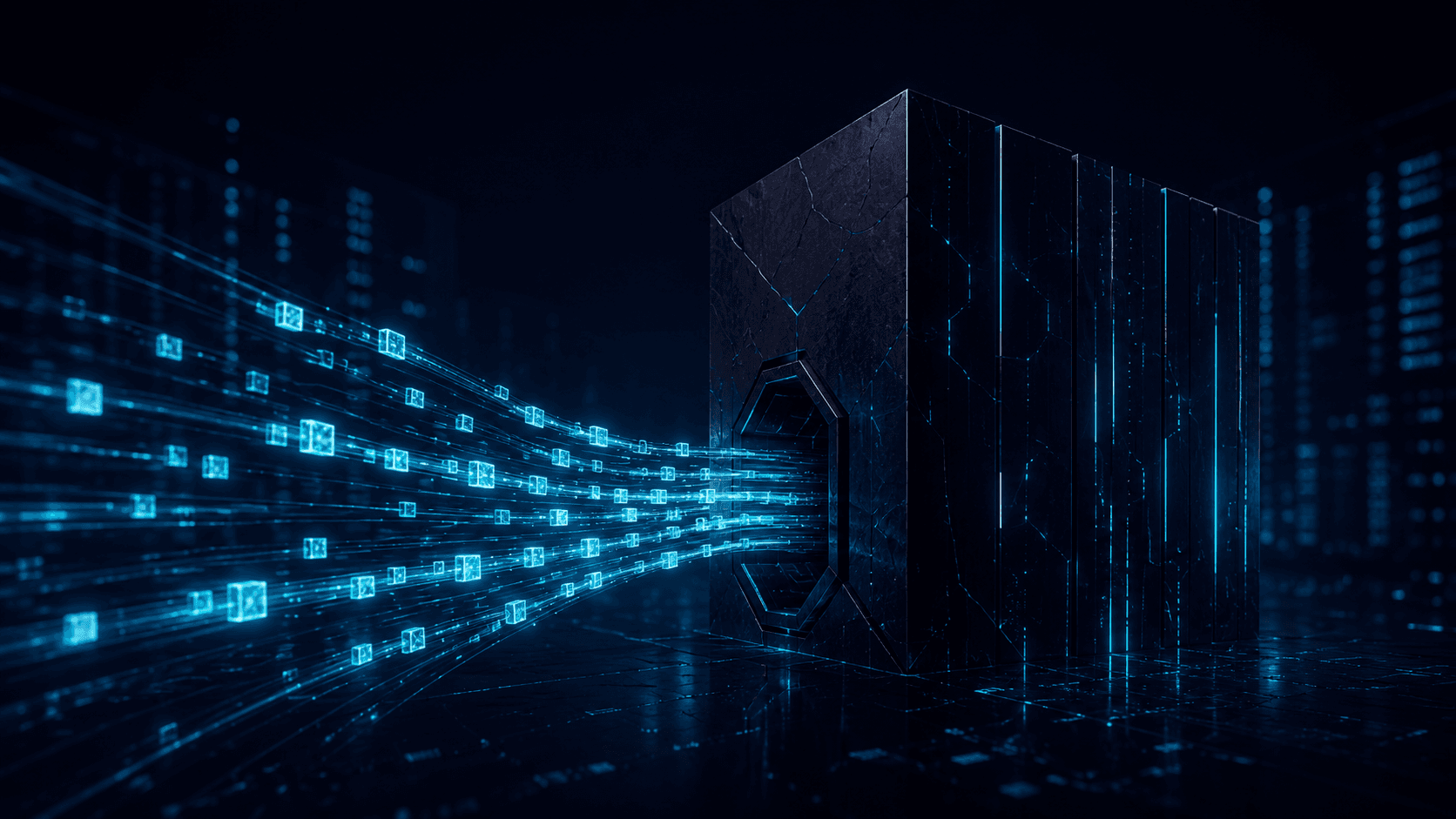
While the realization of a cryptographically relevant quantum computer (CRQC) may still be several years away, the threat it poses to our digital infrastructure is already being exploited today. This phenomenon, known as "Harvest Now, Decrypt Later" (HNDL), involves adversarial actors intercepting and storing encrypted data with the intent of decrypting it once quantum technology matures.
The Persistence of Secrets
Current encryption standards, such as RSA and ECC, rely on the mathematical difficulty of factoring large numbers or solving discrete logarithms. While these problems are nearly impossible for classical computers to solve in any reasonable timeframe, Shor's algorithm demonstrates that a sufficiently powerful quantum computer could bypass these defenses in minutes.
"The data we send today isn't just today's business. It's the intellectual property and national security secrets of the next thirty years."
— Quantum Security News Report, 2025
Strategic adversaries are not waiting. They are building vast repositories of encrypted communications, financial records, and military intelligence. For information with a long shelf-life — such as medical records, classified state secrets, or long-term financial contracts — the HNDL threat is immediate. By the time a quantum computer is operational, the sensitivity of this data will still be high, but the protection will be non-existent.
Transitioning to Post-Quantum Cryptography (PQC)
The National Institute of Standards and Technology (NIST) has already begun standardizing quantum-resistant algorithms. However, the migration process is complex. Most enterprise systems are not "crypto-agile," meaning they cannot easily swap one encryption method for another without significant downtime or infrastructure rework.
- Audit Critical Data: Identify information that requires protection beyond 2030.
- Hybrid Deployments: Combine classical and PQC algorithms to ensure security against both current and future threats.
- Zero-Trust Architecture: Minimize the impact of any single data breach by implementing granular access controls.
The race toward quantum advantage is not just a scientific pursuit; it is a fundamental shift in the global security landscape. Organizations that fail to adopt quantum-resistant standards now are essentially providing their future secrets to anyone with a storage drive and patience.