It sounds futuristic, but quantum attacks on our digital world are moving from theoretical to practical far faster than many businesses realize. The cryptographic walls defending global supply chains, financial data, and government secrets are built on mathematical problems that quantum computers threaten to solve exponentially faster than classical machines ever could.
Two decades ago, these threats were purely academic. Today, governments, standards bodies, and cybersecurity experts warn that the countdown to Q-Day — when a quantum computer can break current encryption — is already underway.
This piece dives into the offensive toolkit that quantum computing enables, and the consequences for data security and regulatory compliance.
Shor's Algorithm: The Cryptography Killer
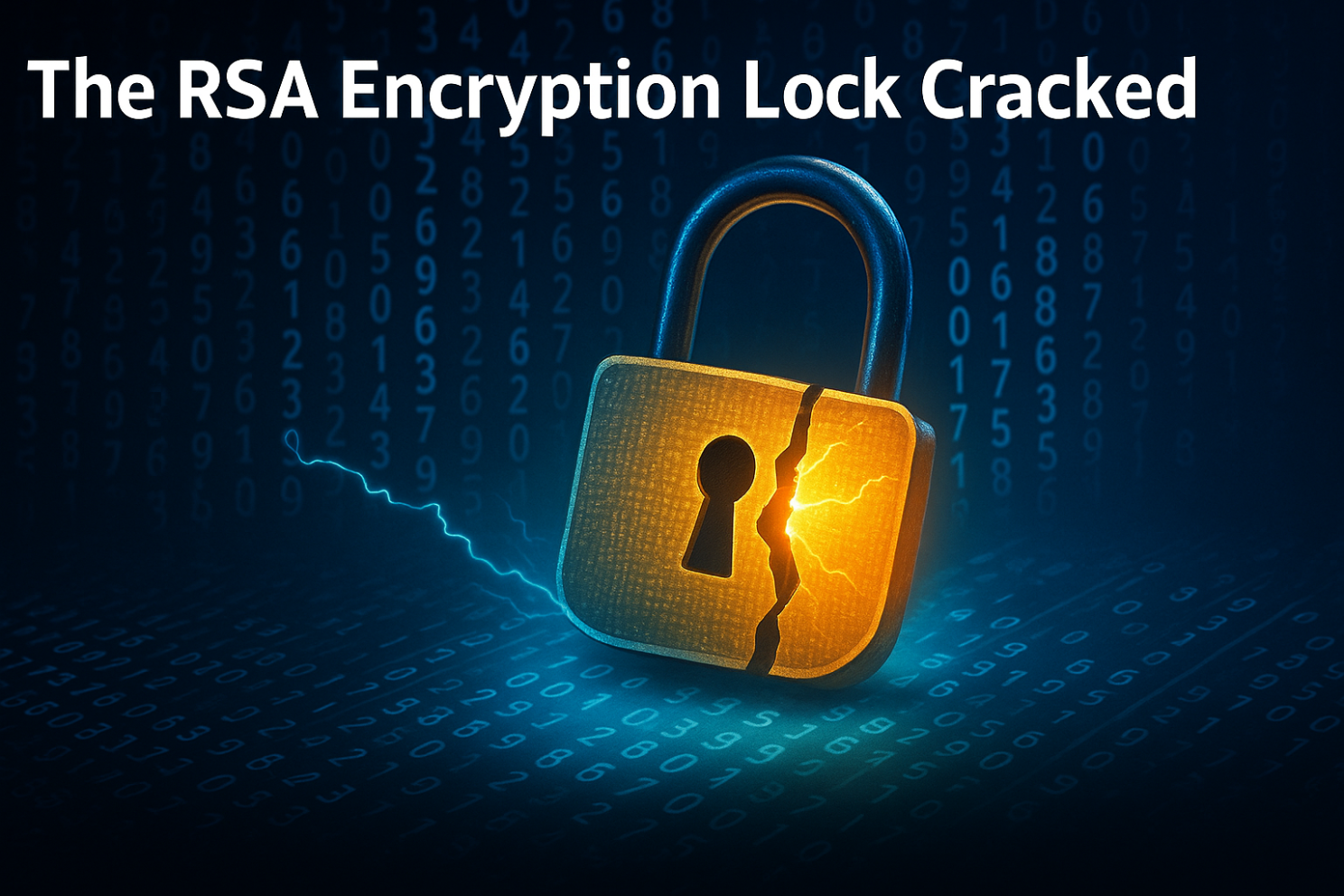
One of quantum computing's most infamous capabilities is Shor's algorithm, developed in 1994. Shor's method can factor large integers exponentially faster than any classical algorithm — a direct threat to encryption schemes like RSA and ECC, which underpin digital signatures, secure websites, and VPNs.
Researchers have warned that if sufficiently powerful quantum computers emerge, current cryptographic protections will collapse, compromising financial systems, industrial secrets, and government communications. NIST's Post-Quantum Cryptography Project is racing to standardize new cryptographic algorithms resistant to quantum attacks.
Grover's Algorithm: Accelerating Brute Force
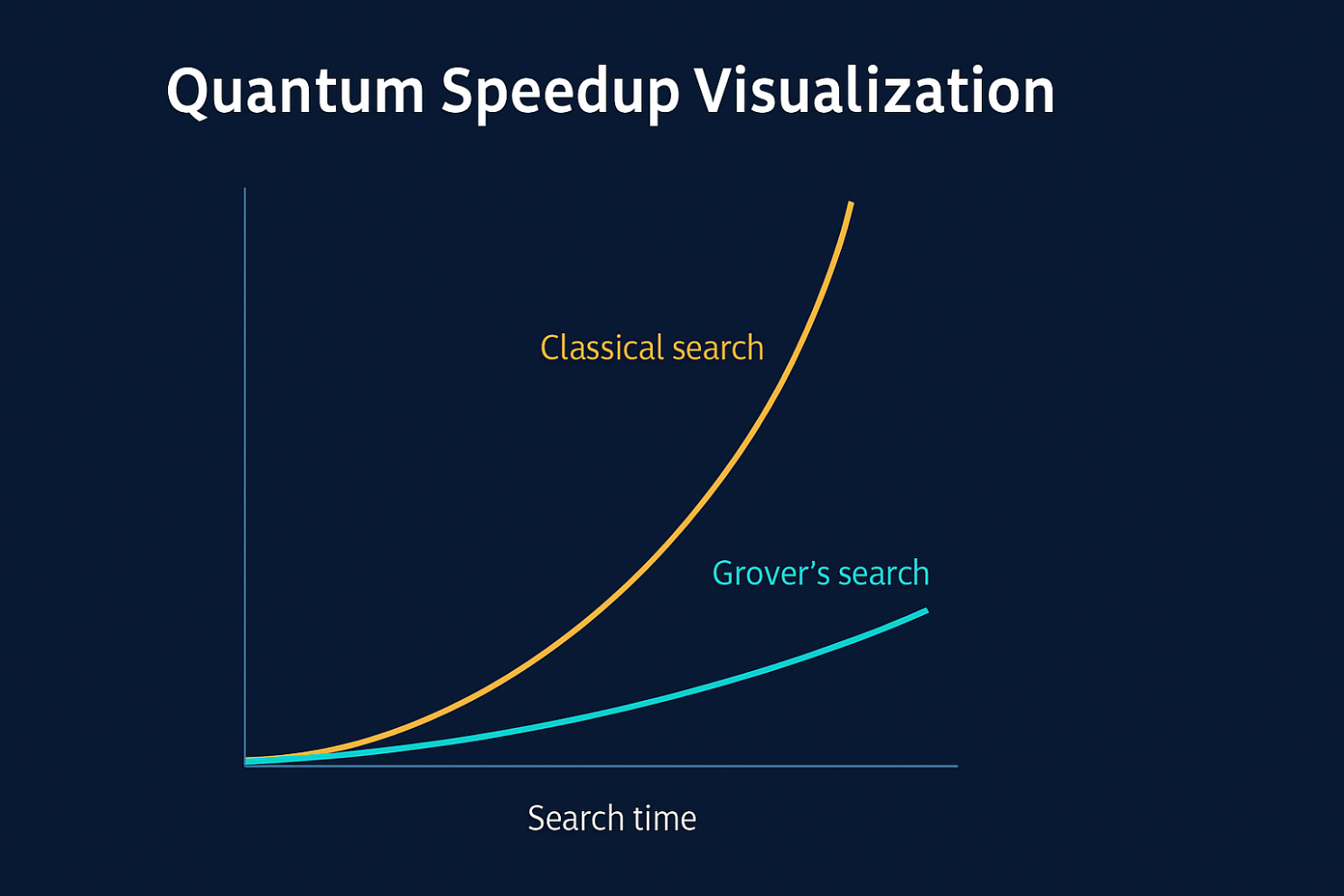
Not every quantum attack smashes cryptography outright. Grover's algorithm offers a subtler threat: a quadratic speedup for brute-force searching through unstructured data.
While it doesn't fully break symmetric algorithms like AES, Grover effectively halves their security margin. AES-256, for example, would provide roughly the equivalent of AES-128 security against a quantum brute-force search. That still matters greatly for protecting high-sensitivity data that must remain secure for decades.
Side-Channel Attacks: Physical Eavesdropping
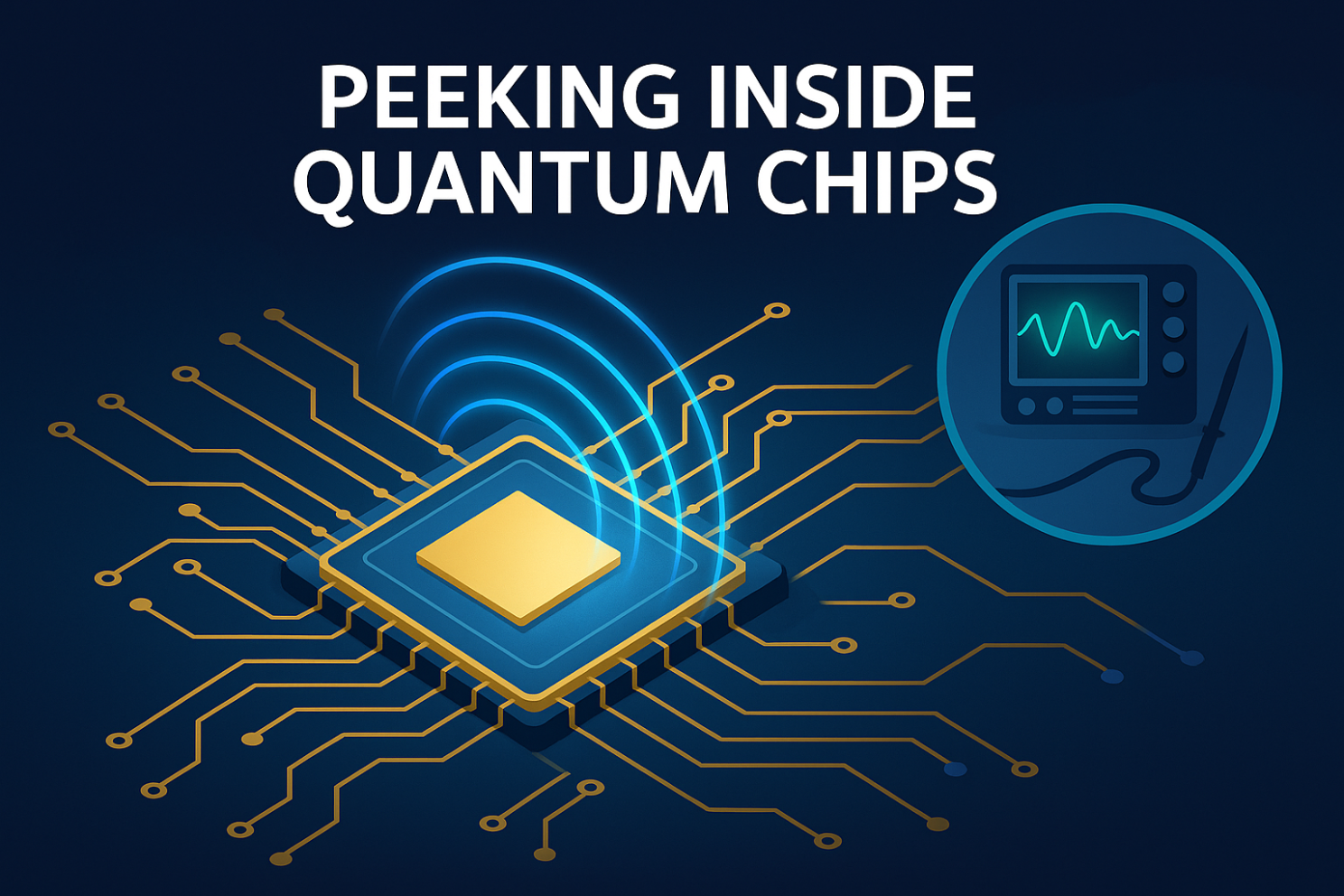
Quantum hardware introduces new avenues for side-channel attacks. Instead of attacking the math, adversaries exploit physical properties like timing variations, power consumption, or electromagnetic emissions to extract secrets.
Researchers have documented power analysis attacks that could compromise even quantum key distribution (QKD) systems. Timing analysis, a classic attack on classical chips, is an emerging threat for quantum processors as well.
Sensational figures like "60% circuit identification" are sometimes quoted in this space, but they require context and specific experimental validation, and have not yet been universally documented across quantum systems.
Crosstalk Exploits: Hidden Communication
A lesser-known threat is crosstalk: unintended interactions between qubits in multi-tenant quantum systems. In cloud-based quantum services, different users might run computations simultaneously, and electromagnetic interference between these workloads could leak confidential information.
Researchers have also uncovered a new class of cyberattacks, dubbed "QubitHammer," that pose a serious threat to cutting-edge superconducting quantum computers. In multi-tenant, cloud-based quantum systems — where multiple users share the same quantum hardware — attackers with routine access can exploit this vulnerability by deploying custom pulse sequences. The result is a marked degradation in the performance and accuracy (fidelity) of other users' quantum circuits running on the same machine. Testing has confirmed the disruptive potential of these attacks.
Harvest Now, Decrypt Later
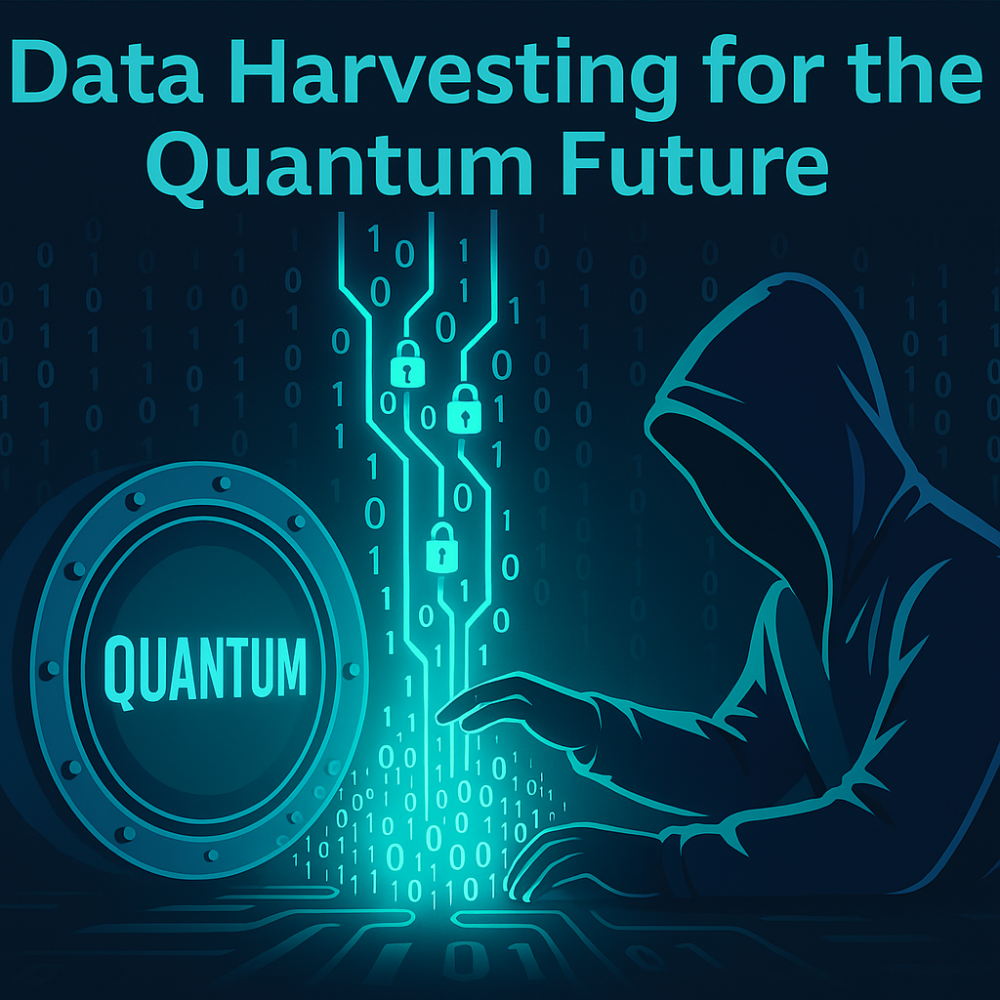
Perhaps the most pressing threat is Harvest Now, Decrypt Later. Attackers are capturing encrypted data today, knowing that future quantum computers may eventually decrypt it. NIST and intelligence agencies emphasize that data with a long shelf life — intellectual property, government secrets, and strategic contracts — is at high risk.
Once quantum machines mature, adversaries could unlock years of confidential records, retroactively breaching trust and compliance.
Quantum Threats and Regulatory Exposure
Data isn't all equally vulnerable. Quantum threats matter most for information that must remain secret for long periods:
| Sensitivity | Short Shelf Life (1–5 yrs) | Medium Shelf Life (5–10 yrs) | Long Shelf Life (10+ yrs) |
|---|---|---|---|
| High | Financial Transactions (PCI DSS, SOX, GDPR) | Personal Health Info (HIPAA, GDPR, CCPA) | State Secrets / IP (National Security Laws) |
| Medium | Customer Data (GDPR, CCPA) | Employee Records (GDPR, Labor Laws) | Long-term Contracts (Contract Law, Industry Regs) |
| Low | Public Research (Open Source) | Archived Logs (Data Retention Laws) | Historical Data (Data Privacy indirect) |
Businesses holding data in the high-sensitivity, long-shelf-life corner of this matrix must urgently evaluate cryptographic readiness to avoid catastrophic regulatory breaches and reputational harm.
The Path Forward
Quantum computing is not a tomorrow problem — it's a today challenge for forward-thinking organizations. The tools in the quantum attacker's arsenal are real and documented. While the exact timeline to Q-Day remains unknown, prudent companies should inventory cryptographic assets, monitor standards development, and prepare migration plans.
Those who wait risk discovering that yesterday's secrets have become tomorrow's headlines.
References
- Tan, Y., Choudhury, N., Basu, K., & Szefer, J., "QubitHammer Attacks: Qubit Flipping Attacks in Multi-Tenant Superconducting Quantum Computers," 2025.
- Geller, M. R., et al., "Rigorous Measurement-Based Leakage Estimation for Superconducting Qubits," arXiv:2005.02816, 2020.
- Grover, L., "A Fast Quantum Mechanical Algorithm for Database Search," arXiv:quant-ph/9605043, 1996.
- Kocher, P., "Timing Attacks on Implementations of Diffie-Hellman, RSA, DSS, and Other Systems," CRYPTO'96, 1996.
- Lee, W. J. B., Wang, S., Dutta, S., El Maouaki, W., & Chattopadhyay, A., "SWAP Attack: Stealthy Side-Channel Attack on Multi-Tenant Quantum Cloud System," Nanyang Technological University, 2025.
- NSA, "Quantum Computing and Post-Quantum Cryptography," 2022.
- NIST, "Post-Quantum Cryptography Project," 2024.
- Vermeer, M. J. D., & Peet, E. D., "Securing Communications in the Quantum Computing Age: Managing the Risks to Encryption," RAND Corporation, 2020.
- Shor, P., "Algorithms for Quantum Computation: Discrete Logarithms and Factoring," arXiv:quant-ph/9508027, 1994.
- Zheng, Y., Shi, H., Pan, W., Wang, Q., & Mao, J., "Quantum Hacking on an Integrated Continuous-Variable Quantum Key Distribution System via Power Analysis," Entropy, 23(2), 176, 2021.