
Quantum communication is reshaping the future of secure data exchange. By leveraging the principles of quantum mechanics, such as superposition and entanglement, quantum communication offers unbreakable encryption and faster-than-classical information sharing. Recent breakthroughs in fiber-based quantum networks and satellite-enabled quantum key distribution (QKD) signal that a global quantum internet is no longer a theory, but an achievable future.
This piece explores the pivotal technologies driving this transformation, including quantum loops, satellite-based entanglement, QKD, and hardware advances like room-temperature qubits.
Quantum Networks: Building the Foundations
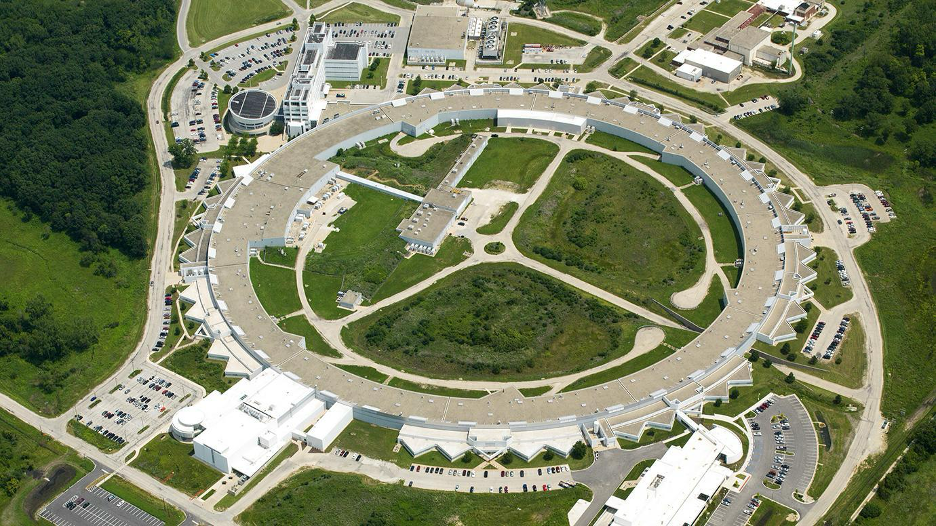
A critical breakthrough came in 2020 when the University of Chicago and Argonne National Laboratory tested a 54-mile quantum loop using existing fiber-optic infrastructure in the Chicago suburbs. The loop successfully transmitted quantum information across the city in real time, marking one of the first real-world testbeds for a quantum internet.
That same year, the network expanded by another 35 miles, forming a 124-mile, six-node quantum testbed to support experimentation with quantum key distribution, quantum repeaters, and entanglement-based applications.
This infrastructure provides the backbone for national quantum communication systems, helping scientists test scalable encryption protocols that could eventually integrate into broader internet backbones.
Quantum Communication from Space: The Micius Satellite
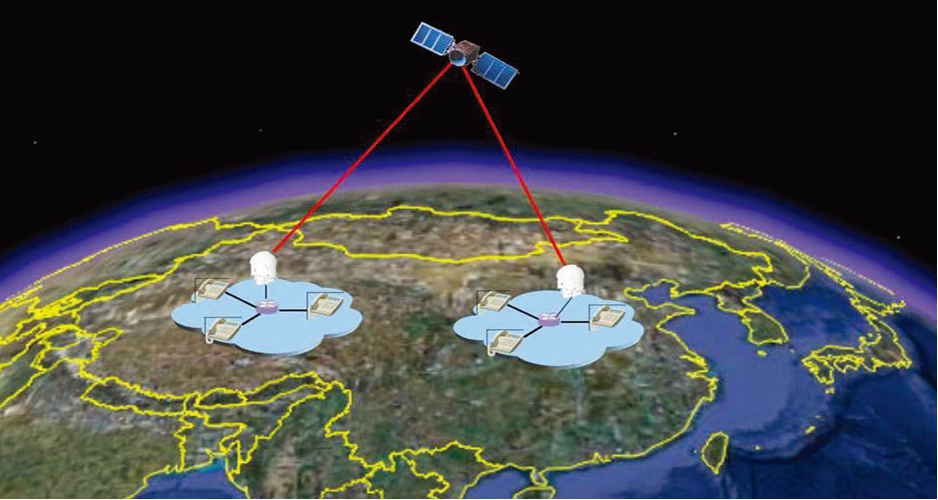
One major hurdle for terrestrial quantum communication is signal degradation over long distances. To overcome this, scientists have turned to space.
In 2017, Chinese researchers used the Micius satellite to transmit entangled photon pairs across 1,200 kilometers, from space to two ground stations on Earth — shattering the previous entanglement distance record and validating the feasibility of satellite-based QKD.
Later that year, the Micius satellite enabled a quantum-encrypted video conference between the Chinese Academy of Sciences and the Austrian Academy of Sciences, further showcasing secure communication across continents.
These experiments confirmed that the quantum internet will rely heavily on hybrid systems: fiber networks on the ground and quantum satellites in orbit.
Quantum Key Distribution: Securing the Future
Quantum Key Distribution (QKD) is a method of sharing encryption keys using quantum particles. The unique advantage of QKD lies in its ability to detect eavesdropping — any interception attempt disturbs the quantum state and alerts the sender and receiver.
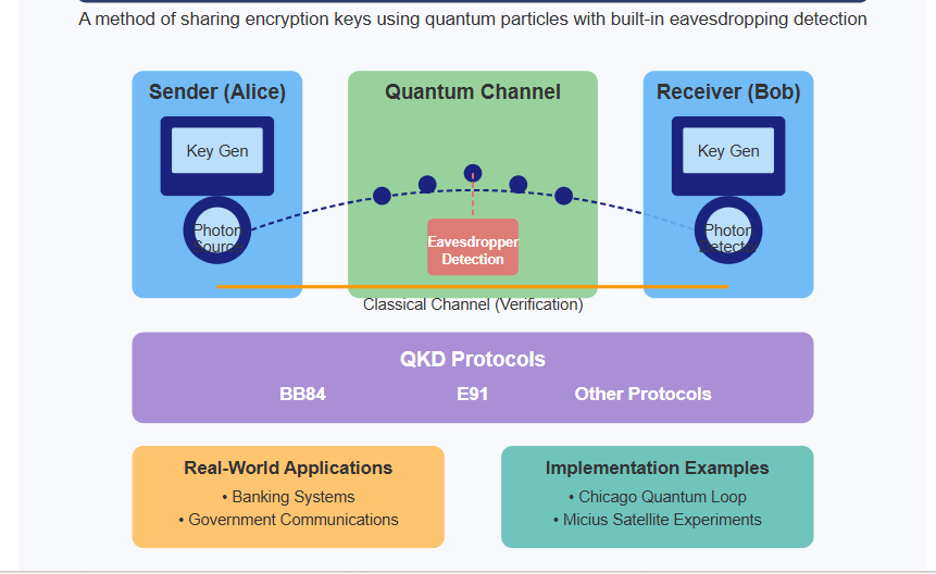
QKD protocols like BB84 and E91 have already been tested in both fiber and satellite environments, including the Chicago quantum loop and Micius experiments. This technology is already being piloted in banking, government, and critical infrastructure systems.
QKD stands as a key pillar of the quantum internet, offering a future-proof solution to cyber threats, including those posed by quantum computers themselves.
Advances in Quantum Hardware: Room-Temperature Qubits
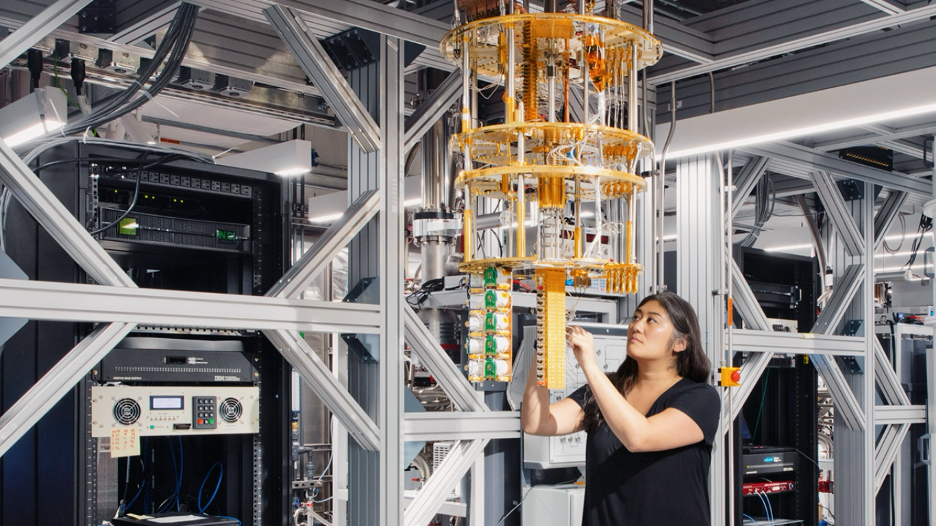
For the quantum internet to scale, we need compact, reliable quantum devices. That's where room-temperature qubits come in.
Recent studies have demonstrated the use of defect spin qubits in materials like diamond (NV centers) and silicon carbide, which can maintain quantum coherence at ambient conditions. This removes the need for expensive cryogenic cooling and enables integration into standard semiconductor fabrication.
This leap in hardware is pivotal for deploying quantum routers, repeaters, and network nodes in real-world conditions, making the infrastructure of the quantum internet feasible at scale.
The Path Ahead: From Prototype to Planetwide
With successful demonstrations on land and in space, global momentum is building for a planetwide quantum internet. Governments in the U.S., China, and the EU are investing billions into quantum research. The U.S. Department of Energy's Blueprint for the Quantum Internet (2020) outlines key milestones: establishing entanglement distribution, quantum memory, and security protocols across large-scale networks.
Private-sector partnerships, such as those between national labs, telecom providers, and academic institutions, are driving pilot projects from theory into practical deployment.
Key Goals Ahead:
- Quantum Repeaters to extend distance.
- Quantum Memory for information storage.
- Quantum-Resistant Protocols that integrate with classical networks.
- Standardization and Interoperability among international systems.
Conclusion
The quantum internet is no longer a far-off dream. Fiber-optic testbeds, space-based entanglement, QKD, and room-temperature qubits are rapidly aligning to bring the vision into reality.
The next step is scale: expanding from secure research links and government labs to commercial and public use. By continuing to invest in infrastructure, hardware, and global collaboration, we can build a communication future where privacy is quantum-secure and globally accessible.
References
- University of Chicago, "The Quantum Internet, Explained," 2020.
- University of Chicago, "Chicago Expands Quantum Network," 2020.
- Science, "Satellite-Based Entanglement Distribution over 1200 km," 2017.
- Scientific American, "China Preps for Quantum Internet," 2017.
- Nature, "China's Quantum Satellite Clears Major Hurdle," 2017.
- Science, "Room-Temperature Coherence of NV Centers in Diamond," 2019.
- U.S. Department of Energy, "Blueprint for the Quantum Internet," 2020.