
The quantum revolution is no longer confined to physics labs and supercomputing centers. With real-world applications emerging in drug discovery, diagnostics, and biomedical modeling, healthcare professionals — especially doctors — will increasingly intersect with quantum-enabled systems. While physicians don't need to master quantum mechanics, they will benefit greatly from understanding how these new technologies are reshaping medicine.
To illustrate just how relevant this is becoming: in 2024, researchers at Japan Tobacco's pharma division partnered with D-Wave Quantum Inc. to simulate complex protein-drug interactions using a quantum annealing system — an effort that improved large language models for molecule generation and significantly outperformed classical methods in accuracy and energy efficiency. This isn't science fiction. This is the direction healthcare is heading.
This piece outlines what it means to be "quantum ready" in the medical field, how doctors are likely to encounter quantum technologies, and what steps they can take to prepare thoughtfully and strategically.
Why Quantum Matters to Medicine
Quantum computing uses quantum bits (qubits) that can represent multiple states simultaneously. This enables faster and more efficient processing than classical computers for certain complex problems. In medicine, this potential is becoming tangible in several areas:
- Drug discovery — Simulating molecular interactions with greater accuracy, enabling faster identification of viable compounds.
- Medical imaging and diagnostics — Improving the performance of machine learning models that interpret imaging data.
- Precision medicine — Modeling individualized treatment responses based on genetic and biological data.
According to McKinsey & Company, the global quantum computing market for pharmaceuticals could grow to $700 billion by 2035 if current trends continue.
What Does It Mean to Be Quantum Ready?
Becoming quantum ready doesn't mean physicians need technical expertise in quantum computing. It means being informed, open to collaboration, and prepared to adopt new tools. Specifically, it includes:
- Awareness — Recognizing where quantum tools are entering healthcare.
- Integration — Supporting clinical workflows that use quantum-accelerated systems.
- Collaboration — Engaging with multidisciplinary teams that include technologists and researchers.
- Advocacy — Promoting ethical, secure, and patient-centered use of quantum solutions.
Where Will Doctors Encounter Quantum First?
AI-Powered Imaging and Diagnostics
Quantum-enhanced algorithms are being developed to assist with radiology by improving image resolution, segmentation, and anomaly detection. These tools won't replace doctors but will enhance their diagnostic capabilities.
Qilimanjaro, a European quantum startup, collaborates with healthcare institutions to accelerate imaging workflows using hybrid quantum-classical computing.
Clinical Trials and Drug Matching
Quantum simulations are expected to significantly improve how drugs are screened and matched to patient profiles, reducing trial times and increasing precision.
According to Nature Reviews Drug Discovery, quantum computers could reduce the time and cost of pre-clinical testing by up to 50% over the next decade.
Genomics and Biomolecular Research
Quantum tools will enhance our understanding of biological systems, including protein folding and genetic expression. This opens doors to more tailored and effective treatments. Companies like Google and ProteinQure are currently researching how quantum computing can help model protein-ligand interactions more efficiently.
How Doctors Can Prepare
1. Stay Informed
- Read journals and newsletters related to quantum healthcare.
- Follow events and research from quantum-health conferences like Quantum.Tech and IEEE Quantum Week.
2. Embrace AI and Digital Tools
- Familiarity with AI systems will ease the transition to quantum-assisted platforms.
- Clinical decision support tools today may soon incorporate quantum-enhanced backends.
3. Collaborate Across Disciplines

- Join innovation teams and tech-ethics boards within hospitals.
- Engage with researchers and data scientists on pilot programs involving emerging tech.
4. Support Education and Training
- Advocate for integrating quantum literacy into medical school curricula.
- Encourage continuing medical education (CME) that addresses advanced digital tools.
5. Address Security and Privacy Early
Quantum computers may one day break standard encryption. The healthcare industry should begin transitioning to post-quantum cryptographic protocols to protect sensitive data.
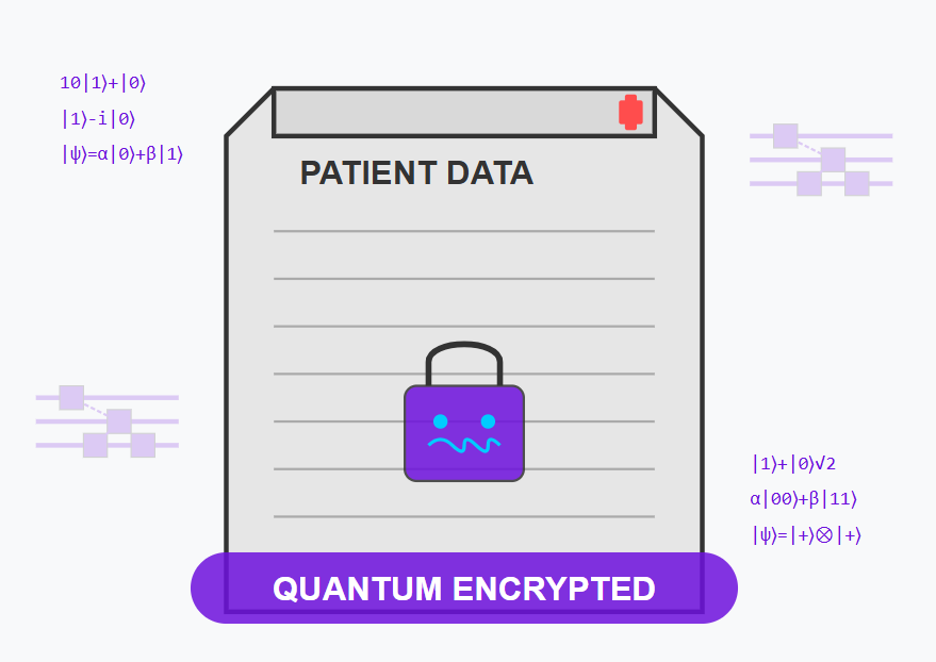
Refer to NIST's Post-Quantum Cryptography Project to understand how encryption standards are evolving.
Final Thoughts: The Quantum-Aware Clinician
Just as doctors once adapted to digital records and AI-based triage tools, they will soon work alongside quantum-enhanced systems. The most impactful physicians won't be those who write quantum algorithms, but those who understand how these tools fit into clinical care.
Being quantum ready is not about certification. It's about mindset, engagement, and a commitment to future-forward medicine.
To help assess readiness, consider the following quick checklist:
- Are you familiar with quantum's role in diagnostics and drug discovery?
- Have you encountered quantum-related technologies in your clinical or research workflows?
- Are you involved in any institutional initiatives focused on digital transformation or R&D?
- Is your hospital or practice considering post-quantum data protection protocols?
- Do you regularly engage with updates from trusted sources on quantum developments in healthcare?
This checklist isn't exhaustive, but it's a useful way to begin evaluating your personal and institutional preparedness.
The quantum shift is not a distant future — it's already underway.
References
- D-Wave, "Featured Applications," 2025.
- McKinsey & Company, "What Is Quantum Computing?," 2025.
- Nature Reviews Drug Discovery, 2025.
- Qilimanjaro Technologies, "Healthcare Quantum Partnerships," 2024.
- NIST, "Post-Quantum Cryptography Project," 2023.